
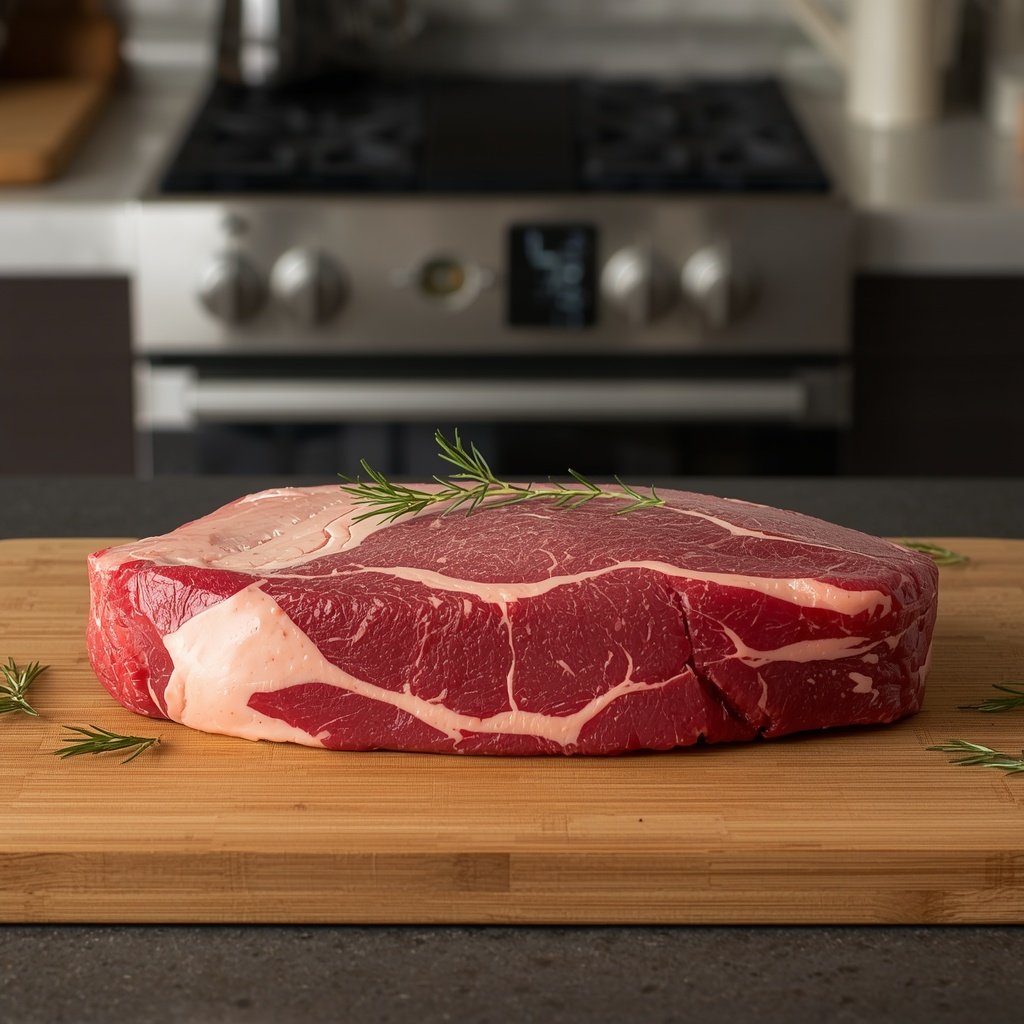
Quick Answer: Beef loses about 25% of its weight when cooked, so 100g of raw beef becomes roughly 75g cooked. The loss ranges from about 20% for a medium steak to 35% for slow-braised beef, mostly from water and rendered fat. Use the calculator below to convert raw and cooked weight for your cut.
Beef: Raw ↔ Cooked Weight Calculator
Type in either box — the other updates automatically. The same ratio works for ounces or pounds. Actual loss varies with fat content, thickness, and doneness.
Beef Raw vs Cooked Weight Reference Table
| Cut / Method | Typical Weight Loss | 100g Raw Becomes |
|---|---|---|
| Ground beef, pan-browned | ~25% (up to 30% if fatty) | ~75g |
| Steak, grilled medium | ~20–25% | ~75–80g |
| Steak, well done | ~30% | ~70g |
| Oven roast | ~25–30% | ~70–75g |
| Braised or slow-cooked | ~30–40% | ~60–70g |
These are practical averages, not exact values. Keep reading for why beef shrinks, how it compares with chicken and fish, the change in calories and protein, and how to track it correctly.
Why Beef Loses Weight When Cooked
Heat makes muscle proteins tighten and squeeze out water, and fat melts and drains away. Water is the bigger share, but in fattier cuts the rendered fat adds to the loss. Higher heat, longer cooking, and more doneness all increase it, while lean cuts lose mostly water, much like chicken breast.
How Cooking Method Changes the Numbers
Quick, hot methods like grilling a medium steak lose the least, since the meat spends little time losing moisture. Ground beef loses somewhat more because the crumbled surface area lets fat and juices escape, and fattier grinds lose more than lean ones. Long braises and slow cooking lose the most, though the meat often sits in liquid, so weigh only the drained meat if you want a clean cooked figure.
Beef vs Chicken and Salmon: Which Loses More?
Beef sits in the middle of the range for common proteins. Its roughly 25% loss is similar to chicken breast at 20–30%, a little higher than chicken thigh at 20–25%, and higher than salmon at 15–25%. The pattern is consistent: the more fat a cut renders and the longer it cooks, the more weight it gives up.
Raw vs Cooked Beef: Calories and Protein
| Per 100g (90% Lean Ground Beef) | Raw | Cooked, Pan-Browned |
|---|---|---|
| Calories | ~176 kcal | ~217 kcal |
| Protein | ~20g | ~26g |
| Fat | ~10g | ~12g |
Cooked beef looks denser per gram because water has left while the protein and fat remain. The whole portion does not gain calories; if anything, it loses a little when fat drains off. For scale, 100g of cooked ground beef delivers about the protein of four large eggs.
How to Track Beef Weight Accurately
| Raw Weight | Cooked Weight (~25% Loss) |
|---|---|
| 100g | ~75g |
| 200g | ~150g |
| 250g | ~188g |
| 500g | ~375g |
| 1 lb (454g) | ~340g (12 oz) |
Pick one state and match your food entry to it. If the package weight is raw, log a raw entry; if you weigh after cooking, use a cooked entry. Mixing them can throw a calorie count off by roughly 20%, which matters on a controlled plan like our 1500 calorie meal plan. To work backward, divide the cooked weight by 0.75, so 150g cooked equals about 200g raw.
Frequently Asked Questions
About 25% on average, ranging from roughly 20% for a medium steak to 35% for braised or slow-cooked beef.
About 75g for ground beef, and roughly 65g to 80g depending on the cut and how long it is cooked.
About 133g of raw beef. Divide the cooked weight by 0.75 to estimate the raw weight.
Either works if your food entry matches. Weighing raw is more consistent because cooking loss changes with method and doneness.
Usually slightly more, especially fattier ground beef, because fat renders out and drains away during cooking.
The calories in the whole portion stay about the same, or drop slightly if fat drains off. Per gram, cooked beef is more calorie-dense because water is lost.
Final Answer: Beef Raw vs Cooked Weight
Beef loses about 25% of its weight when cooked, so 100g raw becomes roughly 75g cooked, and 100g cooked equals about 133g raw. The real figure runs from about 20% for a medium steak to 35% for slow-cooked beef. For the most consistent tracking, weigh beef raw whenever you can and log it with a raw food entry.