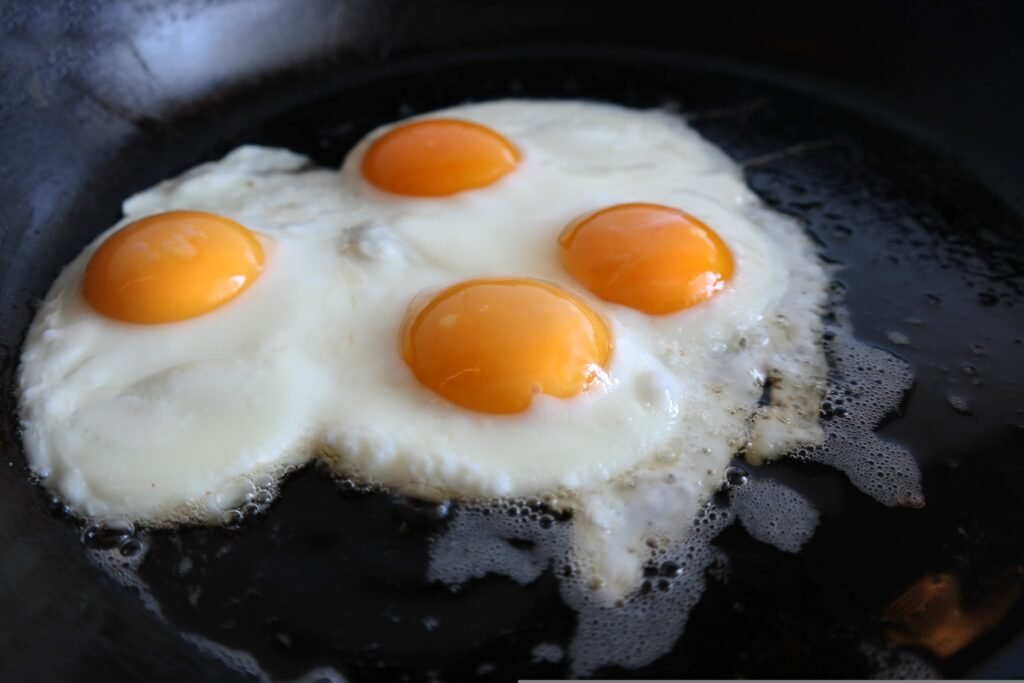
Quick Answer: 1 large egg has about 6–7g of protein, so you need about 5 eggs to reach 30g. Egg whites alone need more — about 8–9 whites for the same 30g, since each white has less protein than a whole egg. Use the calculator below for your specific target.
Eggs ↔ Protein Calculator
Type in either box — the other updates automatically. Eggs needed rounds up to the nearest half-egg since you can’t cook a fraction of an egg.
Protein Target vs Eggs
| Protein Target | Number of Eggs |
|---|---|
| 20g | 3 eggs |
| 25g | 4 eggs |
| 30g | 5 eggs |
| 40g | 6–7 eggs |
This is based on large eggs. Smaller eggs will require slightly more.
How Much Protein Is in One Egg?
Protein content by egg size
The protein content of eggs depends on their size. Larger eggs naturally contain more protein.
| Egg Size | Protein |
|---|---|
| Small | ~5g |
| Medium | ~6g |
| Large | ~6–7g |
| Extra Large | ~7–8g |
A standard large egg (most common) contains about 6–7 grams of protein, making it a reliable and consistent source.
Egg protein is also considered “complete,” meaning it contains all essential amino acids your body needs.
How Much Protein in 2, 3, and 4 Eggs? (1–6 Egg Chart)
| Large Eggs | Protein | Calories |
|---|---|---|
| 1 egg | ~6.3g | ~72 kcal |
| 2 eggs | ~12.6g | ~144 kcal |
| 3 eggs | ~18.9g | ~216 kcal |
| 4 eggs | ~25.2g | ~288 kcal |
| 5 eggs | ~31.5g | ~360 kcal |
| 6 eggs | ~37.8g | ~432 kcal |
2 large eggs have about 12.6g of protein and 144 calories, 3 eggs about 19g, and 4 eggs about 25g. With extra-large eggs, add roughly 1g of protein per egg; with medium eggs, subtract about 0.7g per egg.
Protein in 2 Scrambled Eggs vs 2 Hard-Boiled Eggs
| 2 Large Eggs, Cooked As | Protein | Calories (Approx.) |
|---|---|---|
| Hard-boiled | ~12.6g | ~155 kcal |
| Poached | ~12.5g | ~145 kcal |
| Scrambled (with a little butter and milk) | ~13g | ~180–200 kcal |
| Fried in oil | ~12.5g | ~180 kcal |
Cooking method barely changes the protein: 2 scrambled eggs and 2 hard-boiled eggs both give about 12.5 to 13g. What changes is the calories from added butter, oil, or milk. Cooking actually makes egg protein easier to digest than eating eggs raw.
Whole Eggs vs Egg Whites for 30g Protein
Key differences
Whole eggs contain both protein and fat, while egg whites are almost pure protein with very low calories.
| Option | Quantity for 30g Protein |
|---|---|
| Whole eggs | 5 eggs |
| Egg whites | 8–9 egg whites |
| Mix (2 eggs + whites) | Balanced option |
Which option is better?
- Whole eggs → more nutrients (vitamins, healthy fats)
- Egg whites → lower calories, high protein
If your goal is fat loss, egg whites can be helpful. If you want balanced nutrition, whole eggs or a mix is ideal.
Calories in 30g Protein from Eggs
Calories vary depending on whether you use whole eggs or egg whites.
| Option | Calories |
|---|---|
| 5 whole eggs | ~350 kcal |
| 8 egg whites | ~130 kcal |
Whole eggs provide more energy due to fat content, while egg whites are much leaner.
If you’re building balanced meals, combining eggs with easy-to-digest recovery foods can improve digestion and nutrient absorption.
Is Eating 5 Eggs a Day Healthy?
The cholesterol myth (simplified)
For many years, eggs were blamed for raising cholesterol levels, mainly because egg yolks contain dietary cholesterol. This led to the belief that eating eggs regularly could increase the risk of heart disease. However, modern research has changed this perspective significantly.
Today, studies show that dietary cholesterol (from food) has a much smaller effect on blood cholesterol than previously thought. Instead, blood cholesterol levels are more strongly influenced by factors like saturated fats, trans fats, overall diet quality, and lifestyle habits.
For most healthy individuals, eating eggs does not significantly raise “bad” LDL cholesterol. In fact, eggs can increase “good” HDL cholesterol, which helps protect heart health. This means eggs can be part of a balanced diet without increasing cardiovascular risk for the majority of people.
That said, individual responses can vary. Some people, known as “hyper-responders,” may experience a greater increase in cholesterol levels when consuming high amounts of dietary cholesterol. Additionally, people with existing heart conditions, diabetes, or cholesterol issues should monitor their intake more carefully and consult a healthcare professional.
The key takeaway is that eggs themselves are not the problem — overall diet quality matters more. When eaten as part of a balanced diet rich in vegetables, whole grains, and healthy fats, eggs can be a nutritious and safe source of protein.
Safe consumption
Eating up to 4–5 eggs per day is generally safe for healthy people. However:
- People with heart conditions should consult a doctor
- Balance your diet with other foods
- Avoid excessive saturated fats alongside eggs
Eggs are nutrient-dense and can be part of a healthy diet when consumed in moderation.
Best Ways to Get 30g Protein with Eggs (Practical Meals)
Here are simple, real-life meal ideas:
Option 1: Classic Protein Breakfast
4 eggs + 1 toast → ~30g protein
This is a simple and filling breakfast that provides both protein and carbohydrates, helping you stay energized for longer and reducing mid-morning hunger.
Option 2: Balanced Meal
3 eggs + yogurt → adds variety and nutrients
This combination improves overall nutrition by adding probiotics and extra protein, making it a great option for digestion and sustained energy.
You can combine this with Greek yogurt protein portions for a stronger protein profile.
Option 3: High Protein Combo
2 eggs + protein shake → efficient and quick
Perfect for busy mornings or post-workout meals, this option delivers fast-digesting protein along with essential nutrients for muscle recovery.
Option 4: Budget-Friendly Meal
2 eggs + lentils/beans → affordable protein
This is a cost-effective way to reach your protein goal while also adding fiber, which helps keep you full and supports better digestion.
These combinations help avoid eating too many eggs while still hitting your daily protein targets in a more balanced and practical way.
Eggs vs Other Foods for 30g Protein
Eggs are great, but not the only option.
| Food | Quantity for 30g Protein |
|---|---|
| Eggs | 5 eggs |
| Chicken breast | ~100g |
| Greek yogurt | ~2 cups |
| Lentils | ~1.5 cups |
For variety, combining eggs with lean meat portions (How Many Slices of Turkey is 2 Oz?) helps balance your meals.
How Many Eggs for 40g and 50g Protein?
If your protein target is higher, the number of eggs increases accordingly:
40g protein = about 6–7 eggs
50g protein = about 8–9 eggs
Protein vs Eggs Needed
| Protein | Eggs Needed |
|---|---|
| 30g | 5 eggs |
| 40g | 6–7 eggs |
| 50g | 8–9 eggs |
These estimates are based on large eggs with around 6–7g of protein each.
This range is especially useful for athletes, bodybuilders, or anyone following a high-protein diet. However, instead of relying only on eggs, it’s often better to combine them with other protein sources to keep your meals balanced and easier to consume.
Can You Build Muscle with Eggs Alone?
Eggs are an excellent protein source, but relying on them alone is not ideal.
Why eggs are great:
- Complete protein
- Rich in amino acids
- Supports muscle repair
Why variety matters:
- Other nutrients are needed
- Different protein sources improve absorption
- Prevents diet boredom
Adding variety like shrimp-based protein intake options can improve your overall nutrition.
Common Mistakes When Calculating Egg Protein
Many people miscalculate their intake due to simple errors:
- Not considering egg size
- Confusing cooked vs raw weight
- Ignoring additional ingredients
- Relying only on eggs for protein
Being aware of these mistakes helps you stay accurate and consistent.
Who Should Eat 30g Protein from Eggs?
This protein target is ideal for:
- Gym beginners
- People trying to lose weight
- High-protein breakfast seekers
- Muscle-building individuals
Eggs are especially useful because they are quick, affordable, and easy to prepare.
Final Thoughts on Eggs for 30g Protein
So, how many eggs equal 30g protein? The simple answer is about 4–5 large eggs, depending on size and preparation.
Eggs are one of the easiest ways to reach your daily protein goals, but they work best when combined with other protein sources for a balanced diet. Whether your goal is muscle gain, weight loss, or better nutrition, using eggs strategically can make your diet more effective and sustainable.
Frequently Asked Questions
About 4–5 large eggs.
Around 6–7 grams.
Yes, for most healthy individuals.
Egg whites are lower in calories, but whole eggs have more nutrients.
Around 6–7 eggs.
Yes, but combining with other foods is better.
Pingback: How Much Ham Per Person? (Bone-In, Boneless & Spiral) - purehealthmode