
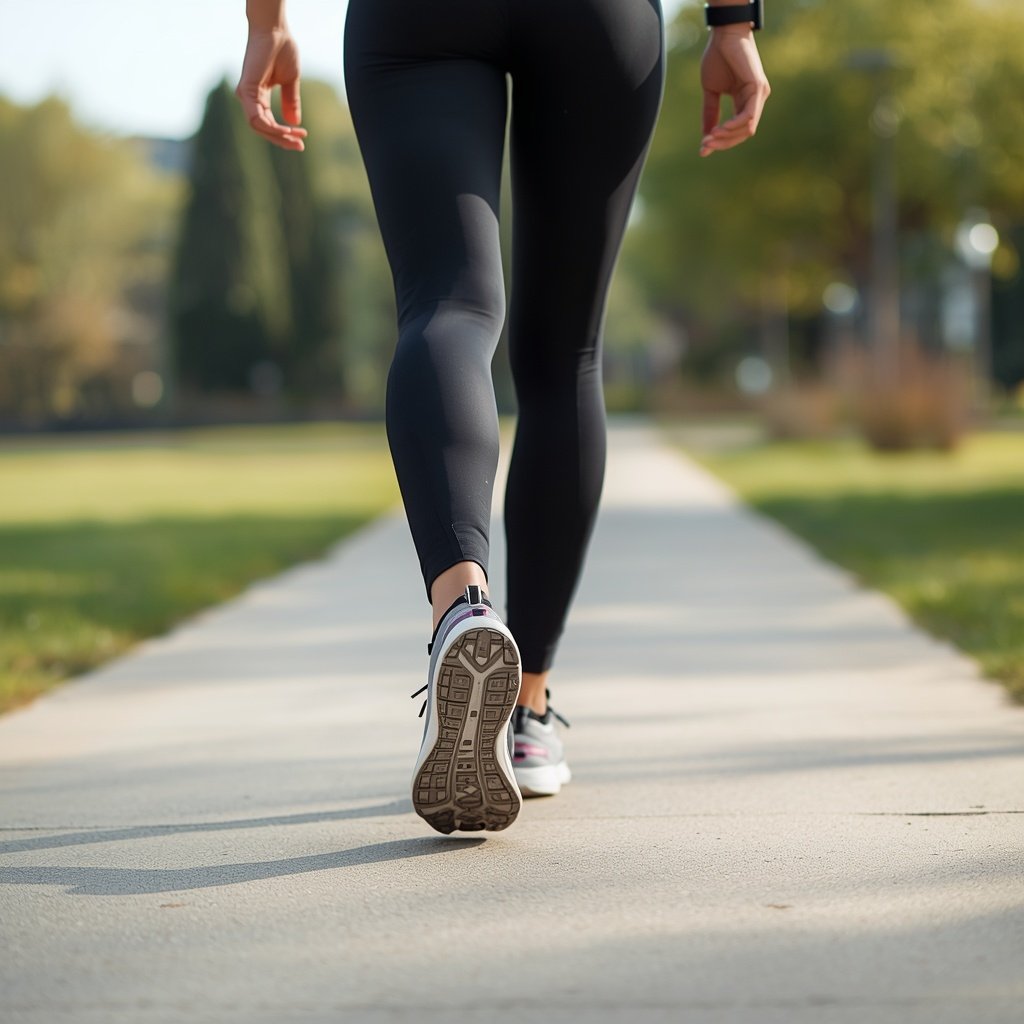
Quick Answer: 10,000 steps takes about 100 minutes of walking at an average pace of roughly 100 steps per minute. A brisk pace of about 115 steps per minute cuts that to around 87 minutes, while a slow stroll stretches it to about 125. Use the calculator below to convert steps to minutes at your own pace.
Walking: Steps ↔ Minutes Calculator
Type in either box — the other updates automatically. Your real pace depends on height, terrain, and how often you stop.
Steps to Minutes: Quick Reference Table
| Steps | Slow (80/min) | Average (100/min) | Brisk (115/min) |
|---|---|---|---|
| 2,500 | ~31 min | ~25 min | ~22 min |
| 5,000 | ~63 min | ~50 min | ~43 min |
| 7,500 | ~94 min | ~75 min | ~65 min |
| 10,000 | ~125 min | ~100 min | ~87 min |
These times assume continuous walking at a steady pace. Keep reading for what changes the total, how far 10,000 steps actually is, the calories involved, and whether you really need to hit that number.
What Changes How Long 10,000 Steps Takes
The biggest factor is your cadence, meaning steps per minute. Researchers commonly treat about 100 steps per minute as the threshold for moderate-intensity walking, which is why 100 minutes is the standard benchmark. Faster cadence shortens the time, and slower walking, hills, stairs, or waiting at crossings lengthen it.
Stride length matters too. Taller people cover more ground per step, but cadence still decides the clock. Also remember that not all 10,000 steps come from dedicated walks, since many people already log several thousand steps from ordinary movement around home and work, which can shrink the walking time you need to set aside.
How Far Is 10,000 Steps?
| Stride Length | Distance for 10,000 Steps |
|---|---|
| 2.2 ft (0.67 m) | ~4.2 miles (6.7 km) |
| 2.5 ft (0.76 m) | ~4.7 miles (7.6 km) |
| 2.75 ft (0.84 m) | ~5.2 miles (8.4 km) |
Most adults land close to 4.7 miles, or about 7.6 km. That is roughly 4 to 5 miles for the typical walker, which fits the pace figures above, since 100 minutes at a moderate pace covers a similar distance.
Calories Burned Walking 10,000 Steps
A step burns about 0.04 calories on average, so 10,000 steps comes to roughly 400 calories, or about 350–500 depending on body weight and pace. Against a daily target such as our 1500 calorie meal plan, that is a meaningful but modest contribution rather than a license to eat significantly more.
Do You Really Need 10,000 Steps a Day?
The 10,000 figure traces back to 1960s pedometer marketing in Japan rather than to a clinical threshold. Larger studies since then suggest health benefits keep rising with more steps but tend to level off somewhere around 7,000–8,000 steps a day for many adults, and the exact point varies with age. Any extra walking still supports heart health, and if you are unsure how often to walk, read whether you can walk every day.
How to Fit 10,000 Steps Into Your Day
You do not need one long walk. Three 30-minute walks at an average pace add up to about 9,000 steps, and normal daily movement usually covers the rest. Short walks after meals or during breaks also fit easily into a routine, and they double as a simple energy boost, as covered in our list of daily health habits that improve energy.
Frequently Asked Questions
About 100 minutes at an average pace of 100 steps per minute, roughly 87 minutes when walking briskly, and about 125 minutes at a slow pace.
About 4 to 5 miles (roughly 6.5 to 8 km). Most people land near 4.7 miles (7.6 km) using a 2.5 foot stride.
Roughly 350 to 500 calories, with about 400 as a common average, depending on body weight and pace.
About 100 steps per minute at an average pace, around 80 when strolling, and 115 or more when walking briskly.
Yes. Steps count the same whether you take them in one long walk or several short ones spread through the day.
For most healthy adults it is not too much, but it is fine to build up gradually. Benefits also appear at lower step counts, and anyone with a medical condition should ask their doctor first.
Final Answer: How Many Minutes of Walking Equals 10,000 Steps
10,000 steps takes about 100 minutes of walking at an average pace, roughly 87 minutes when brisk, and up to 125 minutes when strolling. That covers around 4 to 5 miles and burns about 400 calories. Since your own cadence and stride vary, a step tracker is more reliable than a stopwatch for knowing when you have actually reached the goal.