
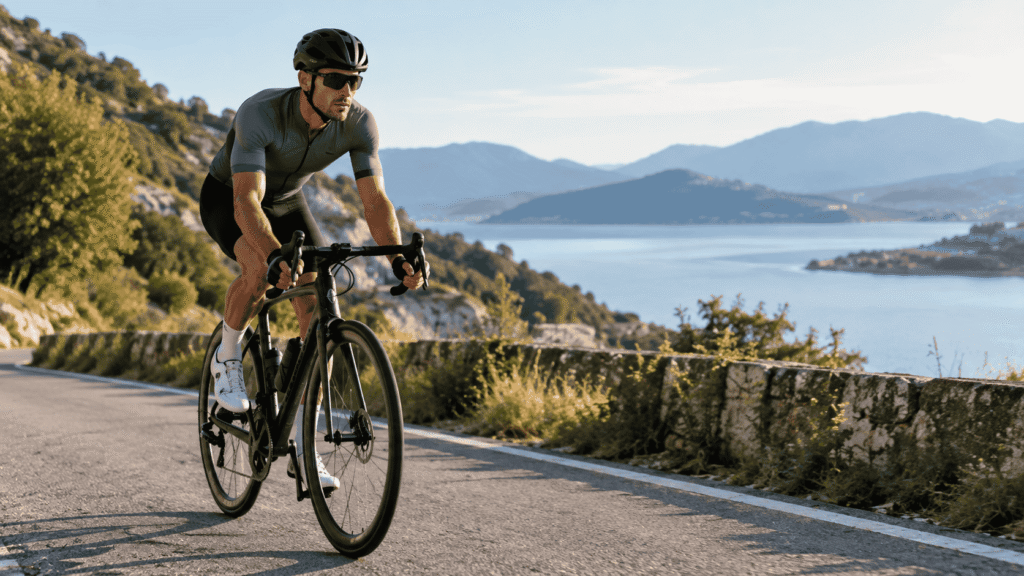
Quick Answer: 1 hour of cycling covers about 10 to 14 miles at a casual pace, 12 to 16 miles for a moderate recreational ride, and 16 to 20+ miles at a brisk or vigorous effort. Most recreational cyclists average around 12–14 mph on flat terrain. Use the calculator below to convert your own pace into distance.
Cycling: Minutes ↔ Miles Calculator
Type in either box — the other updates automatically. Terrain, wind, bike type, and traffic stops all change real-world distance.
1 Hour of Cycling: Distance by Pace
| Riding Level | Typical Speed | Distance in 1 Hour |
|---|---|---|
| Leisurely | ~10 mph | ~10 miles |
| Casual/recreational | ~12–14 mph | ~12–14 miles |
| Moderate/commuting | ~15–16 mph | ~15–16 miles |
| Brisk/fit rider | ~18–20 mph | ~18–20 miles |
| Fast/competitive | ~22+ mph | ~22+ miles |
Most riders without specific training land in the casual to moderate range. Keep reading for what changes your speed, how many calories an hour of cycling burns, and how it compares with walking.
What Changes How Far You Ride in an Hour
Fitness level is the biggest factor, but terrain, bike type, and conditions matter almost as much. A road bike on flat, smooth pavement is meaningfully faster than a mountain bike on trails or a hybrid bike on gravel, and headwinds or hills can cut your average speed by several miles per hour even at the same effort level. Riding with a group also tends to raise average speed, since drafting behind other cyclists reduces wind resistance.
Calories Burned in 1 Hour of Cycling
| Pace | Calories per Hour (~155 lb rider) |
|---|---|
| Leisurely (~10 mph) | ~300 kcal |
| Moderate (~14 mph) | ~460 kcal |
| Vigorous (~18–20 mph) | ~730 kcal |
Cycling burns considerably more per hour than a similar-effort walk, since a bike lets you cover far more ground for the same amount of time. Someone building a calorie deficit around a plan like our 1500 calorie meal plan can use a moderate hour-long ride to offset a meaningful chunk of a day’s intake.
Cycling vs Walking: Which Covers More Ground?
An hour of even leisurely cycling covers roughly double the distance of an hour of brisk walking, since 10,000 steps take about 100 minutes and cover only 4 to 5 miles. That makes cycling a more time-efficient way to cover distance, though walking has a lower barrier to entry and less impact on the joints for many people, as covered in our guide on whether you can walk every day.
Building Up to a Faster Pace
Speed on a bike comes mostly from consistent riding rather than any single trick, since aerobic fitness and pedaling efficiency improve gradually with regular time in the saddle. Cross-training that strengthens the legs and core, similar to the approach in our back and shoulder workouts guide for the upper body, can support longer, more efficient rides without pushing too hard, too soon.
Frequently Asked Questions
About 10 to 14 miles at a casual pace, and 16 to 20 or more miles at a brisk to vigorous pace, depending on fitness and terrain.
Most beginners average 10 to 14 mph on flat roads, which improves with regular riding.
Roughly 300 calories at a leisurely pace, 450 to 500 at a moderate pace, and 700 or more at a vigorous pace, depending on body weight.
Yes. Hills, headwinds, and rough surfaces like gravel or trails can cut your average speed by several miles per hour compared to flat, smooth pavement.
Yes, considerably. An hour of even easy cycling typically covers roughly double the distance of an hour of brisk walking.
Final Answer: How Many Miles Is 1 Hour of Cycling
1 hour of cycling covers about 10 to 14 miles at a casual pace, rising to 16 to 20 or more miles at a brisk or competitive effort. Most everyday riders fall in the 12–14 mph range on flat terrain. Since fitness, terrain, and bike type all shift the number, treat any single figure as a starting estimate and adjust it once you know your own typical pace.