
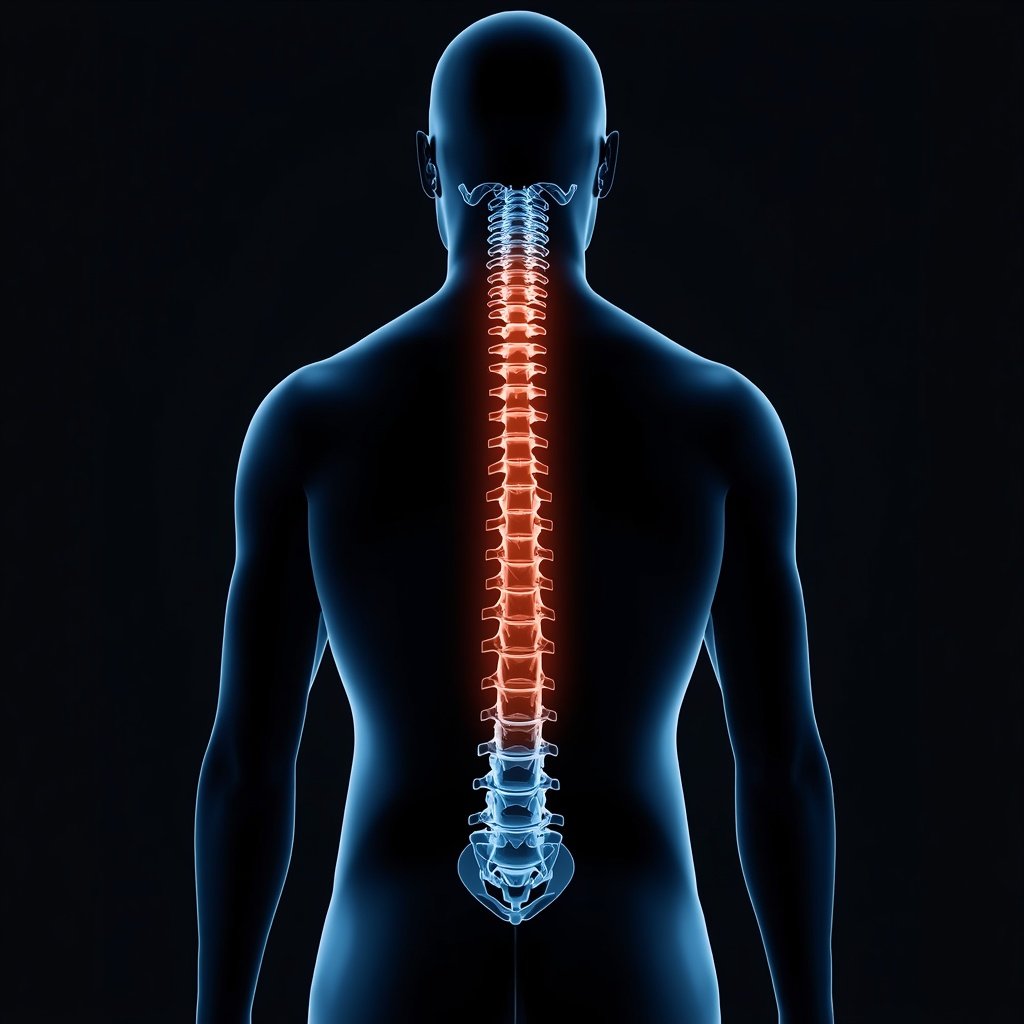
Quick Answer: The adult human spine has 26 bones: 7 cervical (neck), 12 thoracic (mid-back), 5 lumbar (lower back), 1 sacrum, and 1 coccyx (tailbone). The sacrum and coccyx are each single fused bones made from smaller pieces that join together during childhood and the teenage years.
The Spine by Region
| Region | Bone Count | Location |
|---|---|---|
| Cervical vertebrae | 7 | Neck |
| Thoracic vertebrae | 12 | Mid and upper back, attach to ribs |
| Lumbar vertebrae | 5 | Lower back |
| Sacrum | 1 (fused from 5) | Base of spine, between the hip bones |
| Coccyx | 1 (fused from 3–5) | Tailbone |
| Total | 26 |
Counted as individual, unfused segments, a child’s spine actually has 33 pieces, since the 5 sacral segments and up to 5 coccygeal segments haven’t yet joined together. Keep reading for why the sacrum and coccyx are counted differently, common variations, and how the spine compares to the rest of the skeleton.
Why the Sacrum and Coccyx Count as One Bone Each
The sacrum starts as 5 separate vertebrae and the coccyx as 3 to 5 tiny segments. Between adolescence and the mid-twenties, the segments within each structure fuse solid, so a fully grown adult has one sacrum and one coccyx rather than several loose bones. This is similar to how many of the roughly 270 bones a baby is born with gradually fuse down to the adult total of 206 bones across the whole skeleton by the mid-twenties.
What Each Region of the Spine Does
The 7 cervical vertebrae support the head and allow it to turn, nod, and tilt, with the top two (the atlas and axis) specifically shaped for rotation. The 12 thoracic vertebrae each anchor a pair of ribs, which limits how much they can move but gives the rib cage its structure. The 5 lumbar vertebrae are the largest and thickest, since they bear most of the upper body’s weight and handle the bulk of bending and lifting. The sacrum anchors the spine to the pelvis, and the coccyx serves as an attachment point for several pelvic floor muscles and ligaments.
Common Variations in Vertebral Count
26 is the standard adult count, but small variations exist. A minority of people have a transitional vertebra at the border between the lumbar spine and sacrum, sometimes described as lumbarization (an extra lumbar-like segment) or sacralization (a lumbar vertebra partly fused to the sacrum). These variations are usually found incidentally on an X-ray or MRI and are not automatically a sign of a problem, though they can occasionally affect back mechanics.
How the Spine Compares to the Rest of the Skeleton
The spine’s 26 bones make up about 13% of the adult skeleton’s 206 bones, a modest share given how central it is to posture and movement. By comparison, the hands and feet alone account for well over half the body’s bones, as covered in our breakdown of how many bones are in the human hand. The spine makes up for its smaller bone count with dense ligaments, discs, and muscles that give it both flexibility and load-bearing strength.
Frequently Asked Questions
26 bones: 7 cervical, 12 thoracic, 5 lumbar, 1 sacrum (fused from 5 segments), and 1 coccyx (fused from 3–5 segments).
7 cervical vertebrae, the same number in nearly all mammals regardless of neck length.
Because the sacrum and coccyx start as multiple small, unfused segments that gradually fuse into one solid sacrum and one solid coccyx by early adulthood.
Yes, transitional vertebrae at the lumbar-sacral border are a fairly common anatomical variation and are often found incidentally rather than causing symptoms.
The lumbar spine. Its 5 vertebrae are the largest in the spine and handle most of the load from the upper body.
Final Answer: How Many Bones Are in the Spine
The adult spine has 26 bones: 7 cervical, 12 thoracic, 5 lumbar, 1 sacrum, and 1 coccyx. That count reflects the sacrum and coccyx as single fused structures, not the individual segments a child is born with. Minor variations like an extra transitional vertebra are common and usually harmless, so a slightly different count on an X-ray is not automatically cause for concern.