
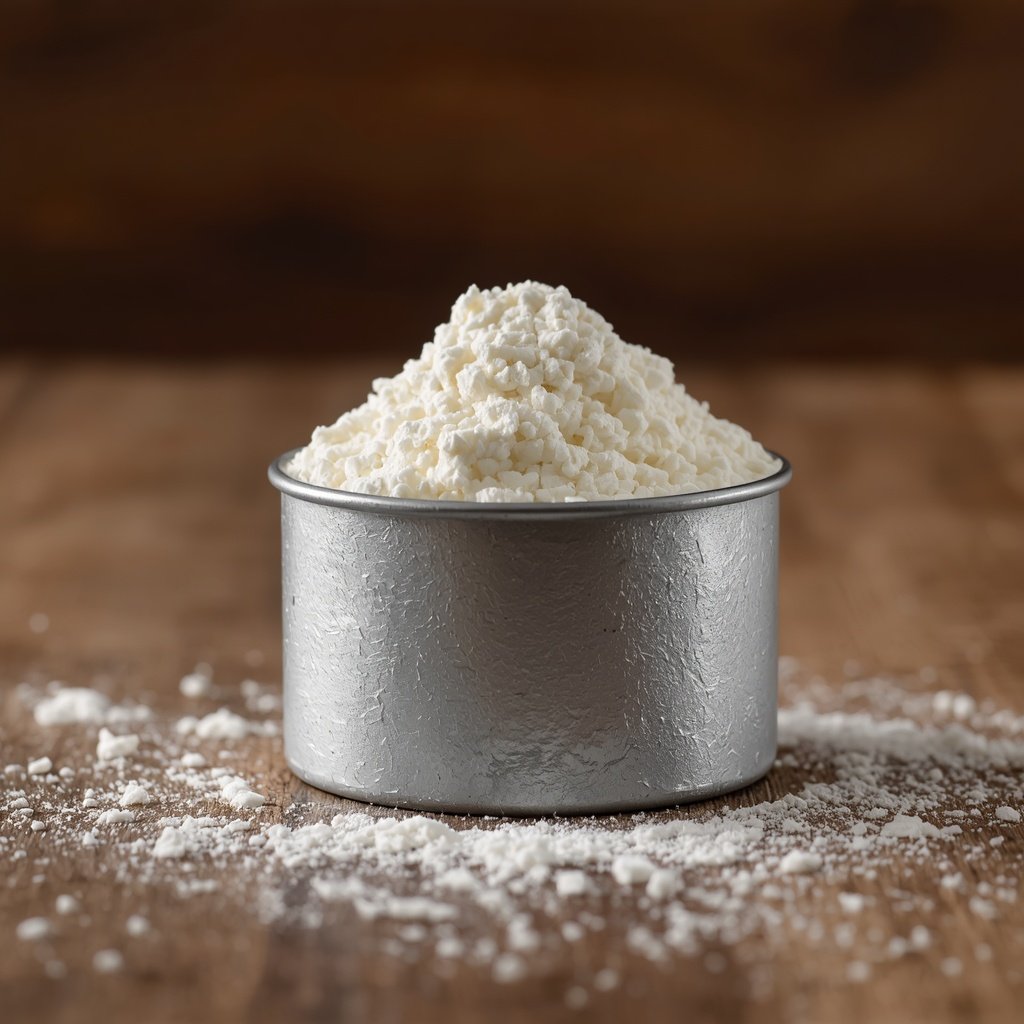
Quick Answer: 250g of all-purpose flour is about 2 cups, based on the common baking reference of 125g per cup. If you scoop flour straight from the bag instead of spooning it in, the same 250g can measure closer to 1.8 cups, since scooping packs in more flour per cup. Use the calculator below to convert grams and cups for your method.
Flour: Cups ↔ Grams Calculator
Type in either box — the other updates automatically. How you fill the cup changes the weight more than the flour type does.
Flour Grams to Cups Table
| Grams | Cups (125g/cup) |
|---|---|
| 60g | ~1/2 cup |
| 125g | ~1 cup |
| 190g | ~1.5 cups |
| 250g | ~2 cups |
| 375g | ~3 cups |
| 500g | ~4 cups |
Keep reading for why the measuring method matters so much, how other flour types compare, and why bakers generally recommend weighing flour instead.
Why Cup Measurements for Flour Vary So Much
Flour compresses easily, so how you get it into the cup changes its weight far more than most bakers expect. Spooning flour lightly into a measuring cup and leveling it off with a knife gives roughly 120g per cup, while scooping the cup directly into the flour bag and sweeping off the top can pack in 140g or more. That’s a difference of nearly 20%, which is enough to noticeably change a cake or bread recipe.
250g of Different Flour Types in Cups
| Flour Type | 250g in Cups |
|---|---|
| All-purpose flour | ~2 cups |
| Whole wheat flour | ~1.9 cups |
| Almond flour | ~2.6 cups |
| Oat flour | ~2.8 cups |
Lighter, airier flours like almond or oat flour take up more volume for the same weight, which is why a recipe that swaps in one of these needs a different cup measurement even at the same 250g. A gluten-free baker following a gluten-free meal plan will often run into this, since almond and oat flour are common wheat flour substitutes with noticeably different densities.
Why Bakers Recommend Weighing Flour
A kitchen scale removes the packing variable entirely, since 250g is always 250g no matter how it’s scooped. This matters most in baking, where flour is often the largest ingredient by weight and small errors compound through the rest of the recipe. For everyday cooking where precision matters less, the spoon-and-level method with a standard cup is close enough for most home bakers.
Frequently Asked Questions
About 2 cups, using the common baking reference of 125g per cup for all-purpose flour.
Because flour compresses easily. Spooning it lightly into the cup gives about 120g per cup, while scooping directly from the bag can pack in 140g or more.
No. Lighter flours like almond or oat flour take up more volume per gram, so 250g of those flours measures noticeably more than 2 cups.
For baking, yes. Weighing removes the variation caused by how tightly the flour is packed into the cup, which matters most in recipes where flour is the main ingredient.
About 120 to 125g using the spoon-and-level method, or up to 140g if scooped directly from the bag.
Final Answer: How Many Cups Is 250g of Flour
250g of all-purpose flour is about 2 cups, using the common 125g-per-cup baking reference, though the true figure can range from about 1.8 to 2.1 cups depending on how the flour is measured. For recipes where precision matters, weighing flour on a scale is far more reliable than any cup conversion.