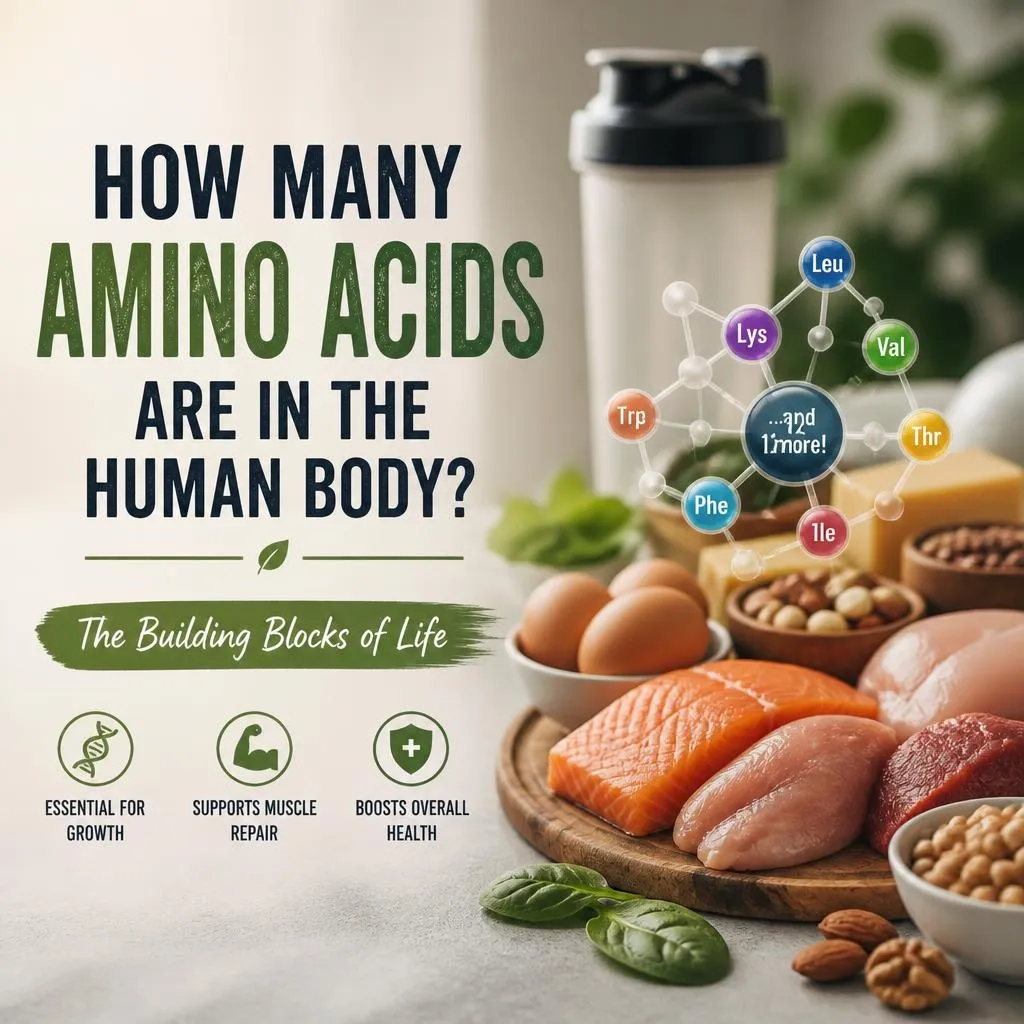
Quick Answer: How many amino acids are in the human body? The body uses 20 standard amino acids to build its proteins (21 if you include the rare selenocysteine). Of these, 9 are essential, meaning you must get them from food, and 11 are nonessential, meaning the body can make them. Some nonessential amino acids become “conditionally essential” during illness, injury, or rapid growth.
How Many Amino Acids Are in the Human Body? Full List
| Essential (9, from food) | Nonessential (11, body makes them) |
|---|---|
| Histidine | Alanine |
| Isoleucine | Arginine* |
| Leucine | Asparagine |
| Lysine | Aspartic acid |
| Methionine | Cysteine* |
| Phenylalanine | Glutamic acid |
| Threonine | Glutamine* |
| Tryptophan | Glycine* |
| Valine | Proline* |
| Serine | |
| Tyrosine* |
*Conditionally essential: normally made by the body, but sometimes needed from food during illness, stress, or growth. Keep reading for what amino acids do, which foods supply them, and conditions linked to amino acid metabolism.
What Amino Acids Do
Amino acids are the building blocks of protein. The body links them in different orders to make tens of thousands of proteins, including muscle, skin, hair, antibodies, hormones like insulin, and the enzymes that drive digestion and metabolism, as explained in how many enzymes are in the human body. Some amino acids also make brain chemicals: tryptophan is used to make serotonin and melatonin, and tyrosine to make dopamine and adrenaline. The three branched-chain amino acids (leucine, isoleucine, and valine) are especially important for muscle repair.
Complete and Incomplete Protein Foods
Complete proteins contain all 9 essential amino acids in useful amounts. They include eggs, meat, fish, dairy, soy, and quinoa. Eggs are a classic example, as covered in how many eggs for 30g protein. Most plant foods are incomplete, low in one or more essential amino acids, but combining them, such as beans with rice or lentils with bread, over the day provides a full set. You don’t need to combine them in the same meal.
Amino Acid Conditions and When to See a Doctor
- Phenylketonuria (PKU): an inherited condition where the body can’t break down phenylalanine. It’s detected by newborn screening and managed with a special diet.
- Maple syrup urine disease: a rare inherited disorder affecting the branched-chain amino acids, also found through newborn screening.
- Homocystinuria: a rare problem processing methionine that can affect the eyes, bones, and blood vessels.
- Protein deficiency: too little protein over time can cause muscle loss, swelling, weakened immunity, and, in severe cases, kwashiorkor in children.
When to see a doctor: talk to a healthcare professional about unexplained muscle loss, swelling, slow wound healing, or developmental concerns in a child. People with kidney or liver disease, or an inherited metabolic condition, should get personal guidance on protein and amino acid intake rather than using supplements. Amino acids work alongside the nutrients listed in how many vitamins does the human body need.
Frequently Asked Questions
20 standard amino acids build human proteins: 9 essential and 11 nonessential. Selenocysteine is sometimes counted as a 21st.
Histidine, isoleucine, leucine, lysine, methionine, phenylalanine, threonine, tryptophan, and valine.
A food that contains all 9 essential amino acids in useful amounts, such as eggs, meat, fish, dairy, soy, and quinoa.
Phenylketonuria, an inherited condition in which the body can’t break down the amino acid phenylalanine. It’s found by newborn screening and managed with diet.
Final Answer: How Many Amino Acids Are in the Human Body
The human body uses 20 amino acids to build proteins: 9 essential ones you must get from food and 11 the body can make. Eating a variety of protein foods provides all of them, and rare inherited amino acid disorders are usually picked up through newborn screening.