
Consumer preferences are changing across the wider market for functional products. While traditional nicotine products remain widely recognised, more people are exploring alternatives that do not contain nicotine or tobacco. This interest has contributed to the development of different pouch formats, including products designed around flavour, caffeine and other functional ingredients.
Non-nicotine pouches are part of this evolving category. Although they may look similar to conventional nicotine pouches, their ingredients and intended purposes can be very different. Some are designed to provide a flavoured oral experience, while others contain caffeine or selected ingredients associated with energy and focus.
Understanding these differences is important when comparing products. Terms such as tobacco-free, nicotine-free and functional are not interchangeable, and the product label should always provide a clearer picture than the packaging or marketing description.
Quick Answer
Non-nicotine pouches are oral products formulated without nicotine. They are typically supplied in small sachets designed to be placed between the gum and upper lip.
Depending on the manufacturer, they may contain flavourings, caffeine, botanical extracts or other functional ingredients. Some are intended primarily for flavour, while others are positioned around energy or focus.
The absence of nicotine does not automatically mean that a product is risk-free. Consumers should check the full ingredient list, serving information and any relevant warnings before choosing a product.
Key Facts
- Non-nicotine pouches are designed without nicotine as an active ingredient.
- Tobacco-free and nicotine-free do not mean the same thing.
- Some nicotine-free products contain caffeine or other active ingredients.
- Functional pouches can differ significantly in their composition and intended purpose.
- Ingredient transparency is important when comparing products.
- A product’s marketing claims should not be treated as proof of effectiveness or safety.
What Are Non-Nicotine Pouches?
Non-nicotine pouches are small, pre-portioned sachets designed for oral use. They are generally placed between the upper lip and gum, where the contents interact with saliva during use.
Their appearance may resemble traditional nicotine pouches, but the defining difference is their formulation. A genuine non-nicotine product does not contain nicotine as an active ingredient.
The category includes several types of products. Some focus on flavour and the oral experience, while others contain ingredients such as caffeine or botanical extracts. Their intended purposes can therefore vary.
The term non nicotine pouches is often used broadly when discussing products that offer an alternative to conventional nicotine pouches. However, consumers should not assume that every product in this category has the same ingredients or characteristics.
Some products are positioned as functional alternatives, while others are closer to flavoured oral products. The ingredient list and manufacturer information show what each product contains.
It is also important to distinguish between products that are nicotine-free and those that are simply described as tobacco-free. Many modern nicotine pouches do not contain tobacco leaf but still deliver nicotine. Consumers who want to avoid nicotine need to check this characteristic specifically.
Nicotine-Free vs Tobacco-Free: What Is the Difference?
The terms tobacco-free and nicotine-free are frequently used in discussions about modern pouch products. They describe different characteristics and should not be treated as equivalent.
Tobacco-free means that a product does not contain tobacco. However, it may still contain nicotine derived from another source. This is common in some modern nicotine pouch formulations.
Nicotine-free means that the product is formulated without nicotine. It may or may not contain other ingredients, depending on its purpose.
The distinction can be summarised as follows:
| Product Description | Tobacco Content | Nicotine Content | What It Means |
| Traditional tobacco product | Contains tobacco | Usually contains nicotine | Uses tobacco as a key component |
| Tobacco-free nicotine pouch | No tobacco leaf | Contains nicotine | Delivers nicotine without traditional tobacco material |
| Nicotine-free pouch | Depends on formulation | No nicotine | Designed without nicotine |
| Functional pouch | Depends on formulation | Should be checked on the label | May contain caffeine or other functional ingredients |
This distinction matters because packaging can sometimes focus on one characteristic while leaving another less obvious.
For example, a product described as tobacco-free is not necessarily suitable for someone who wants to avoid nicotine. Similarly, a nicotine-free product may still contain caffeine or other active substances.
Consumers should therefore look for explicit nicotine information rather than relying on broad descriptions.
Different Types of Nicotine-Free Products
The nicotine-free pouch market includes several product types. They can look similar, but their ingredients and intended uses may differ.
1. Flavoured oral pouches
Some products are designed mainly around flavour. They may contain mint, fruit, citrus or other flavouring ingredients.
Their purpose is primarily to offer an alternative oral experience rather than deliver a stimulant. The exact composition depends on the manufacturer.
2. Caffeine pouches
Caffeine pouches contain caffeine, a stimulant commonly found in coffee, tea and energy drinks.
They offer a different format for consuming caffeine, but the amount per pouch can vary. Consumers should check the serving information and account for other caffeine sources throughout the day.
3. Functional pouches
Functional pouches are formulated around ingredients intended to serve a particular purpose beyond flavour. Depending on the product, they may contain caffeine, vitamins, amino acids or botanical extracts.
The term functional is broad and does not guarantee a specific effect.
4. Stimulant-free alternatives
Some nicotine-free products do not contain caffeine or other conventional stimulants. They may focus on flavour or selected non-stimulant ingredients.
However, the absence of caffeine does not automatically mean that a product has no physiological effects. Other active ingredients may also require consideration.
The different formats illustrate why the category should not be treated as one standardised product group.
Caffeine-Based and Stimulant-Free Options
One of the most important differences between nicotine-free products is whether they contain caffeine.
Caffeine-based pouches are designed to provide caffeine in a compact oral format. Caffeine can temporarily increase alertness and reduce the perception of tiredness. It is widely consumed in beverages and supplements, making it a familiar ingredient for many consumers.
However, caffeine intake should be considered across all sources. Someone who drinks several coffees during the day may already consume a significant amount before using an additional caffeine product.
The European Food Safety Authority (EFSA) has assessed caffeine safety and identified up to 400 mg per day as an amount that generally does not raise safety concerns for healthy adults. A single dose of up to 200 mg is also generally considered not to raise safety concerns for this group. These are reference levels rather than recommended targets, and individual circumstances vary.
Stimulant-free products serve a different purpose. They may be selected by consumers who prefer a pouch format but do not want an additional source of caffeine.
Neither category should be assumed to be suitable for everyone. People who are pregnant or breastfeeding, have certain medical conditions or take medication should seek professional advice before using products containing active ingredients.
Why Are Consumers Exploring Non-Nicotine Alternatives?
There are several reasons why consumers may be interested in products without nicotine. These motivations vary, but they reflect a broader interest in alternatives to traditional nicotine products.
Avoiding nicotine
Some consumers simply prefer not to use nicotine. Since nicotine can cause dependence, choosing a product that genuinely contains no nicotine avoids exposure to that particular substance.
This is an important distinction for people who want to explore the pouch format without choosing a nicotine-containing product.
Exploring different product formats
The pouch format is compact and portable. It does not require a cup, bottle or preparation process, which may appeal to people who prefer products that fit easily into a daily routine.
Interest in functional ingredients
Some consumers are interested in products containing caffeine, vitamins or other ingredients associated with particular functions. These products are not necessarily intended to replace traditional supplements or beverages, such as those discussed in protein shakes for weight loss, but they offer another format to consider.
Greater attention to product ingredients
Consumers are increasingly comparing labels and looking for clearer information about what products contain. This is particularly relevant in a category where similar-looking products may have very different formulations.
Different personal preferences
Some people prefer flavoured products without stimulants, while others are interested in caffeine-based options. The variety of formulations allows consumers to compare products according to their preferences, although suitability still depends on individual circumstances.
It is important not to confuse interest in nicotine-free products with evidence that they can help someone overcome nicotine dependence. People who want to stop using nicotine may benefit from professional guidance and established cessation support.
What to Check Before Choosing a Pouch Product
Choosing a pouch product should involve more than comparing flavours or packaging. The following factors can help consumers make a more informed decision.
1. Confirm the nicotine content
Check whether the manufacturer explicitly states that the product is nicotine-free. Do not assume that a tobacco-free description means the same thing.
2. Review the complete ingredient list
Look for caffeine, botanical extracts, vitamins, amino acids and other active substances. The ingredients determine what the product actually contains.
3. Check ingredient quantities
Where amounts are provided, compare them carefully. For caffeine products, identify the amount per pouch and consider total daily consumption from other sources.
4. Understand the intended purpose
A flavoured pouch, caffeine pouch and focus-oriented functional pouch are not necessarily interchangeable. Identify what the product is designed to provide.
5. Look for manufacturer transparency
Reliable product information should include ingredients, serving instructions and relevant warnings. Be cautious when important details are missing.
6. Avoid unsupported claims
Terms such as natural, clean, energy and functional do not prove that a product is safe or effective. Look for specific information rather than relying on broad promotional language.
7. Consider individual circumstances
People can respond differently to caffeine and other active ingredients. Anyone who is pregnant or breastfeeding, takes medication or has a health condition should get individual advice before using these products.
The Role of Functional Brands in the Nicotine-Free Market
The development of nicotine-free pouch products has created opportunities for brands to explore different formulations and product concepts.
Some manufacturers focus on flavour-based options, while others develop products positioned around caffeine, energy or focus. This means that the wider market now includes products with different purposes, even when their packaging and formats appear similar.
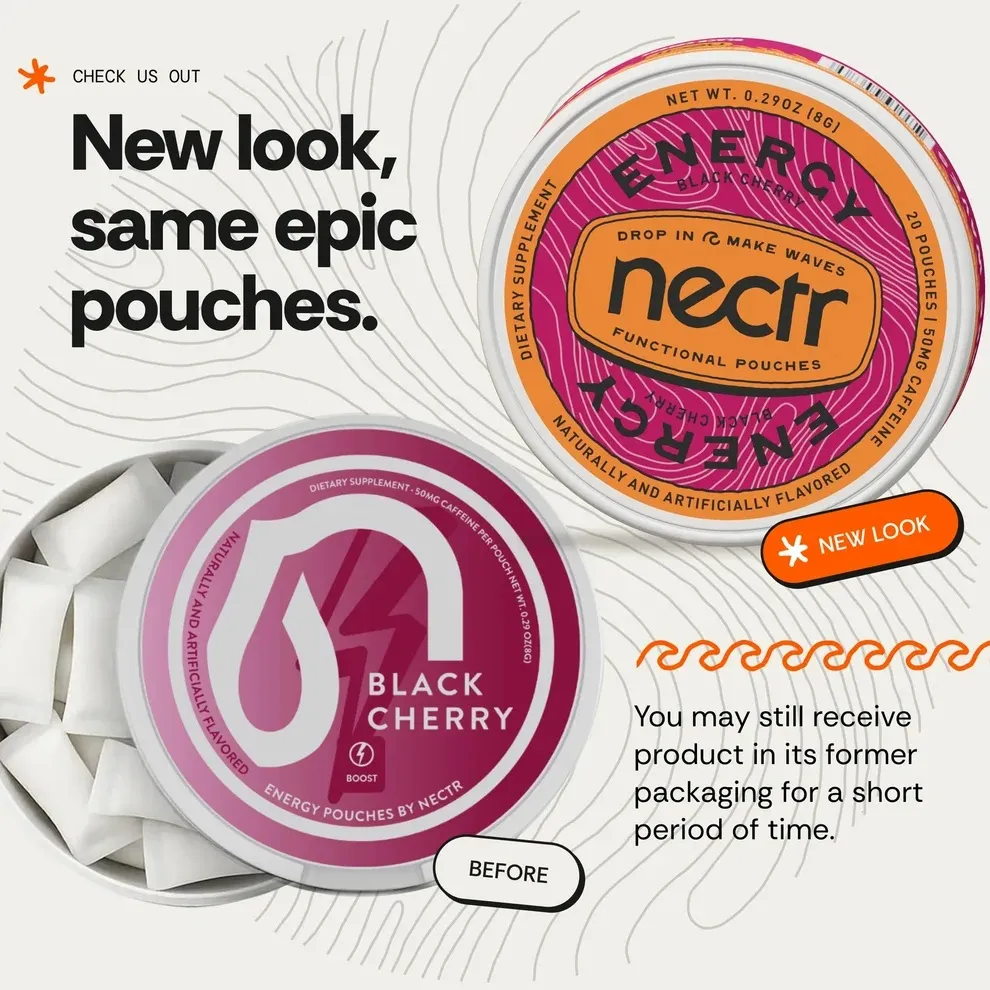
Brands operating in this segment include Nectr, which focuses on functional pouch products. Its range illustrates how the pouch format can extend beyond conventional nicotine products into categories associated with energy and focus.
When evaluating Nectr or any other brand, consumers should compare individual products rather than assuming that every pouch has the same ingredients or intended effects.
Important details include the complete ingredient list, caffeine amount where applicable, serving instructions and relevant product warnings. These details provide a more useful basis for comparison than general marketing claims.
The development of functional pouches also highlights the importance of responsible communication. Manufacturers should clearly distinguish between product positioning, ingredient research and claims that have been demonstrated for a finished product.
As the market grows, brands that provide transparent information and clear product specifications can make it easier for consumers to understand the differences between available options.
Are Nicotine-Free Pouches Completely Risk-Free?
The absence of nicotine is an important characteristic, but it should not be interpreted as proof that every product is completely risk-free.
A nicotine-free pouch may contain caffeine, botanical extracts or other active ingredients. These substances can have their own effects and may not be appropriate for everyone.
For example, excessive caffeine intake can contribute to sleep disruption, restlessness, anxiety and palpitations. Some botanical ingredients may also interact with medication or be unsuitable in particular circumstances.
There are also practical considerations relating to oral use. Consumers should follow the manufacturer’s instructions and stop using a product if they experience an unexpected reaction.
The most responsible approach is to evaluate the full formulation rather than focusing on a single characteristic. Nicotine content is important, but it is only one part of the overall product assessment.
FAQ: Non-Nicotine Pouches
The terms are generally used to describe products formulated without nicotine. However, consumers should always check the ingredient list and manufacturer’s product information to confirm the actual composition.
No. A product can be tobacco-free and still contain nicotine. Many modern nicotine pouches do not use tobacco leaf but deliver nicotine through other ingredients. Anyone avoiding nicotine should check the specific nicotine content.
Some do, but not all. Caffeine pouches are one category of nicotine-free products. Other options may focus on flavour or contain different functional ingredients.
No. Suitability depends on the ingredients and individual circumstances. Products containing caffeine or other active substances may not be appropriate for everyone. Consumers should follow the product instructions and seek professional advice when necessary.
They should not be considered a proven smoking-cessation treatment. Although some consumers may be interested in the pouch format as an alternative oral experience, this does not establish that it treats nicotine dependence. People who want to quit should consider evidence-based support.
Final Thoughts
Non-nicotine pouches are part of a broader shift towards different formats within the functional product market. They offer consumers options that do not rely on nicotine, ranging from flavoured oral products to caffeine-based and other functional formulations.
However, the category is diverse. Tobacco-free does not necessarily mean nicotine-free, and nicotine-free does not automatically mean risk-free.
The most useful approach is to check the complete ingredient list, confirm nicotine content, compare active ingredient quantities and understand the manufacturer’s instructions. As the market develops, transparency and responsible product information will remain essential for helping consumers make informed decisions.
Editorial Disclosure: This is sponsored content published in collaboration with Nectr. Product claims are provided by the manufacturer and have not been independently verified or endorsed by PureHealthMode. Readers should check applicable age restrictions and local regulations before purchasing or using these products.