
Quick Answer:
30g of dried mango is typically equal to about 4–8 pieces, depending on the brand, slice thickness, and how the mango is cut. Thin, narrow slices usually provide more pieces per 30g, while thick chunks or large strips provide fewer. For the most accurate serving size, it’s best to weigh your dried mango using a kitchen scale.
| Weight | Approximate Pieces |
|---|---|
| 15g | 2–4 pieces |
| 20g | 3–5 pieces |
| 30g | 4–8 pieces |
| 40g | 6–10 pieces |
| 50g | 7–13 pieces |
| 75g | 11–20 pieces |
| 100g | 15–26 pieces |
These are approximate serving estimates — the actual piece count depends on brand, slice thickness, and moisture content. Keep reading for a full breakdown by slice type, calories, and measuring tips.
How Many Pieces of Dried Mango Is 30g?
A 30-gram serving of dried mango usually contains about 4–8 pieces, but the exact number depends on how the mango is cut and dried. Thin slices weigh less, so you’ll get more pieces per serving, while thick chunks are heavier and result in fewer pieces. Different brands also vary in slice size, moisture content, and added ingredients, which can affect the final piece count.
Thin Dried Mango Slices
Thin dried mango slices are lightweight and flexible, making them the option with the highest piece count per serving.
A 30g serving typically contains 7–8 thin slices. These are common in brands that slice the fruit very thin before drying, allowing you to enjoy more individual pieces while staying within the same serving size.
Regular Dried Mango Pieces
Most packaged dried mango is sold as regular strips or medium-sized pieces.
A 30g serving generally equals about 5–6 regular pieces. This is the most common portion you’ll find in supermarkets and matches the serving size listed on many nutrition labels.
Large Dried Mango Chunks
Some brands sell dried mango in thick strips or large chunks that weigh more per piece.
In this case, 30g is usually about 4 large pieces. Because each piece contains more fruit, fewer pieces are needed to reach the same weight.
Why Piece Counts Vary
The number of dried mango pieces in a 30g serving isn’t always the same because several factors affect the weight of each piece, including:
- Slice thickness: Thin slices weigh less than thick strips or chunks.
- Cut size: Longer or wider pieces are heavier and reduce the total piece count.
- Moisture content: Softer dried mango retains more moisture and weighs more than drier Mango varieties.
- Brand differences: Manufacturers use different cutting methods and drying processes, resulting in different piece sizes.
For the most accurate serving size, use a kitchen scale rather than counting pieces, especially if you’re tracking calories, sugar, or portion sizes.
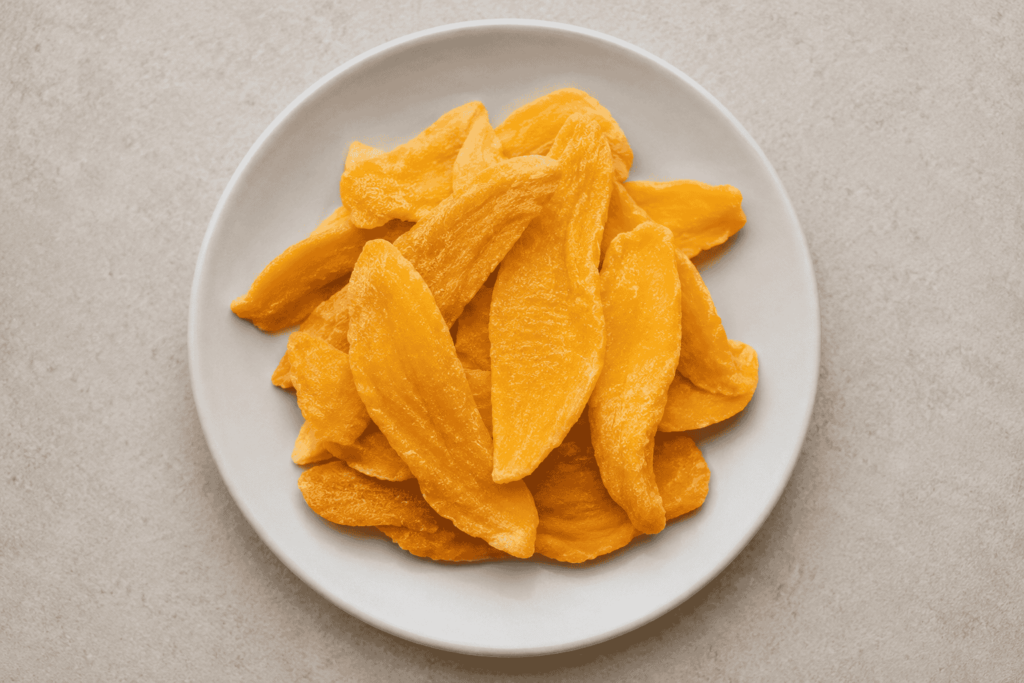
What Does 30g of Dried Mango Look Like?
A 30g serving of dried mango is a relatively small snack that typically fits comfortably in one hand. While the exact appearance depends on the size and thickness of the pieces, it’s a convenient portion for snacking and matches the serving size listed on many packaged dried mango products.
Visual Serving Size
Visually, 30g of dried mango is usually about 4–8 pieces or a small pile that fits in the palm of your hand. Thin slices create a fuller-looking serving because there are more pieces, while thick strips or chunks appear smaller even though they weigh the same.
If you’re unsure about portion size, weighing your dried mango with a kitchen scale is the most accurate method.
Handful Comparison
For most people, 30g of dried mango is approximately one small handful. It should fit comfortably in a cupped palm without overflowing.
Keep in mind that hand sizes vary from person to person, so using your hand is only a rough estimate. If you’re tracking calories or sugar intake, a kitchen scale provides a much more reliable serving size.
Compared with Fresh Mango
Because water is removed during the drying process, 30g of dried mango contains much less volume than 30g of fresh mango. Dried mango appears smaller but has a more concentrated flavor and nutrients.
In comparison:
- 30g of dried mango: About 4–8 pieces or one small handful.
- 30g of fresh mango: Roughly ¼ cup of diced mango, depending on the size of the cubes.
Although both weigh the same, dried mango is denser because most of its water has been removed.
Calories in 30g of Dried Mango
A 30g serving of dried mango typically contains 90–110 calories, depending on whether it is unsweetened or sweetened with added sugar. While dried mango is a good source of carbohydrates, fiber, and vitamins, it is more calorie-dense than fresh mango because most of its water has been removed during the drying process.
Unsweetened Dried Mango
Unsweetened dried mango contains only the natural sugars found in the fruit, making it the lower-calorie option.
A 30g serving of unsweetened dried mango provides approximately 90–100 calories. It also contains small amounts of dietary fiber, potassium, and vitamin A, making it a convenient snack when enjoyed in moderation.
Sweetened Dried Mango
Some packaged dried mango is coated or processed with added sugar to enhance sweetness and improve shelf life.
A 30g serving of sweetened dried mango generally contains around 100–110 calories, though the exact amount varies by brand. It also contains more total sugar than unsweetened varieties, so checking the nutrition label is recommended if you’re monitoring your sugar intake.
Nutrition Overview
The table below shows the approximate nutrition for a 30g serving of dried mango.
| Nutrient | Approximate Amount (30g) |
|---|---|
| Calories | 90–110 kcal |
| Carbohydrates | 23–27 g |
| Sugars | 18–24 g |
| Dietary Fiber | 1–2 g |
| Protein | 0.5–1 g |
| Fat | 0–0.5 g |
Note: Nutrition values are approximate and may vary depending on the brand, drying method, and whether sugar or preservatives have been added. Always refer to the product’s nutrition label for the most accurate information.
Nutrition Facts for 30g of Dried Mango
A 30g serving of dried mango provides mostly carbohydrates from natural fruit sugars, along with small amounts of fiber, vitamins, and minerals. Because nutritional values vary slightly between brands and whether the product is sweetened, the figures below are general estimates for a typical serving.
| Nutrient | Amount (Approx.) |
|---|---|
| Calories | 90–110 kcal |
| Carbohydrates | 23–27 g |
| Sugar | 18–24 g |
| Fiber | 1–2 g |
| Protein | 0.5–1 g |
| Fat | 0–0.5 g |
| Potassium | 120–180 mg |
| Vitamin A | 120–250 mcg RAE |
| Vitamin C | 0–8 mg |
Note: These values are approximate and can vary depending on the brand, drying method, ripeness of the fruit, and whether sugar has been added. For the most accurate nutrition information, always check the Nutrition Facts label on your specific package of dried mango.
Does Every Brand Have the Same Number of Pieces?
No. The number of dried mango pieces in a 30g serving can vary significantly between brands. Some manufacturers cut the mango into thin strips, while others package thick chunks or larger slices. Added sugar, moisture content, and packaging style can also affect the weight of each piece, meaning two 30g servings may contain different numbers of pieces even though they weigh the same.
Different Slice Thickness
Slice thickness is one of the biggest factors affecting piece count. Thin slices weigh less, so you’ll get more pieces in a 30g serving. Thick strips or large chunks weigh more, resulting in fewer pieces.
For example:
- Thin slices: About 7–8 pieces per 30g
- Regular pieces: About 5–6 pieces per 30g
- Large chunks: About 4 pieces per 30g
This is why counting pieces alone isn’t always an accurate way to measure a serving.
Added Sugar vs. Unsweetened
Sweetened and unsweetened dried mango may also differ in piece count. Products with added sugar are often coated or processed differently, which can slightly increase the weight of each piece.
As a result, 30g of sweetened dried mango may contain slightly fewer pieces than the same weight of unsweetened dried mango, although the difference is usually small.
Moist vs. Chewy Dried Mango
The texture of dried mango also affects its weight. Softer, moist dried mango retains more water, making each piece heavier. Drier or chewier mango contains less moisture, so individual pieces often weigh less.
This means a 30g serving of moist dried mango may have fewer pieces, while a drier variety may contain more pieces.
Packaging Differences
Every manufacturer uses its own slicing, drying, and packaging process. Some brands package long strips, others use bite-sized pieces, and some include a mixture of different sizes in the same bag.
Because of these differences, the number of pieces in a 30g serving isn’t standardized across brands. For the most accurate portion size, weigh your dried mango with a kitchen scale instead of relying on the piece count alone.
How Many Cups Is 30g of Dried Mango?
A 30g serving of dried mango is approximately ¼ cup, although the exact volume depends on how the pieces are packed and their size. Thin slices leave more air between pieces, while larger chunks fit together differently. Because cup measurements can vary, weighing dried mango is the most accurate way to measure a serving.
Loosely Filled Cup
When the pieces are gently placed into a measuring cup without pressing them down, 30g of dried mango is about ¼ cup. This is the easiest way to estimate a serving if you don’t have a kitchen scale.
Packed Cup
If the dried mango is pressed into the measuring cup or the pieces are tightly packed, 30g may measure slightly less than ¼ cup because there is less air between the pieces. Larger chunks also tend to pack more tightly than thin slices.
Why Measuring by Weight Is More Accurate
Although measuring cups are convenient, weight provides a much more accurate serving size. Dried mango pieces vary in thickness, shape, and moisture content, so the same cup measurement can contain different amounts by weight.
For the most reliable portion:
- Use a kitchen scale to measure 30g.
- Use ¼ cup only as a general estimate.
- Check the serving size on the package, as brands may use different slice sizes and drying methods.
If you’re tracking calories, carbohydrates, or sugar intake, measuring dried mango by weight rather than by volume will give the most consistent and accurate results.
How Much Is 30g Compared With Other Serving Sizes?
The table below compares common dried mango serving sizes by their approximate number of pieces and calorie content. Actual values may vary depending on the brand, slice thickness, and whether the dried mango is sweetened or unsweetened.
| Serving | Approximate Pieces | Calories |
|---|---|---|
| 15g | 2–4 pieces | 45–55 kcal |
| 30g | 4–8 pieces | 90–110 kcal |
| 45g | 6–12 pieces | 135–165 kcal |
| 60g | 8–16 pieces | 180–220 kcal |
| 90g | 12–24 pieces | 270–330 kcal |
Note: These are general estimates based on average-sized dried mango pieces. Thin slices usually result in more pieces per serving, while thick chunks produce fewer. For the most accurate portion and calorie count, weigh your dried mango with a kitchen scale and check the nutrition label on your specific brand.
Is 30g of Dried Mango a Healthy Snack?
A 30g serving of dried mango can be a healthy snack when eaten in moderation. It provides carbohydrates for energy, small amounts of dietary fiber, and vitamins such as vitamin A, along with potassium. However, because drying removes most of the fruit’s water, dried mango is more concentrated in natural sugars and calories than fresh mango, making portion control important.
Health Benefits
Dried mango offers several nutritional benefits despite its small serving size.
A 30g serving can provide:
- A quick source of energy from natural carbohydrates.
- Vitamin A, which supports healthy vision, skin, and immune function.
- Small amounts of potassium, an important mineral for normal muscle and nerve function.
- Dietary fiber, which can help support healthy digestion.
Choosing unsweetened dried mango as a healthy snack allows you to enjoy these nutrients without added sugar. If you’re looking for more blood sugar-friendly snack ideas, explore our guide on Good Snacks for Diabetics: Smart Choices to Maintain Stable Blood Sugar for practical options and portion tips.
Natural Sugars
Dried mango naturally contains fruit sugars that become more concentrated during the drying process. As a result, a 30g serving contains approximately 18–24 grams of sugar, depending on the variety and whether sugar has been added.
While these sugars provide energy, they’re also easy to consume quickly. If you’re watching your sugar intake, choose unsweetened dried mango and compare nutrition labels when shopping.
Portion Control
Because dried mango is calorie-dense, sticking to the recommended serving size helps you enjoy its nutritional benefits without consuming excess calories or sugar.
A 30g serving (about 4–8 pieces) is an appropriate snack for most people. Measuring your portion with a kitchen scale or using the serving size listed on the package is more accurate than estimating by eye.
When paired with foods such as nuts, seeds, or plain Greek yogurt, dried mango can also make a more balanced snack by adding protein and healthy fats, which may help keep you feeling full for longer. If you’re unsure about yogurt serving sizes, our guide on How Many Grams in a Cup of Greek Yogurt? can help you measure portions more accurately.
How to Measure 30g of Dried Mango Without a Scale
If you don’t have a kitchen scale, you can still estimate a 30g serving of dried mango using your hand, a measuring cup, or by counting the pieces. While these methods aren’t as precise as weighing the fruit, they’re useful for everyday snacking and meal planning.
Using Your Hand
A 30g serving of dried mango is approximately one small handful. The pieces should fit comfortably in your cupped palm without overflowing.
Since hand sizes vary, this method provides only a rough estimate. If you’re tracking calories or sugar intake closely, using a kitchen scale is recommended.
Using Measuring Cups
As a general guide, 30g of dried mango is about ¼ cup when loosely filled. If the pieces are tightly packed or are larger and thicker, the volume may be slightly less than ¼ cup.
Measuring cups are convenient, but they can be less accurate because dried mango pieces differ in size and shape.
Estimating by Piece Count
Another simple way to estimate a serving is by counting the pieces.
For an average 30g serving, you can use these guidelines:
- Thin slices: About 7–8 pieces
- Regular pieces: About 5–6 pieces
- Large chunks: About 4 pieces
Because brands use different cutting and drying methods, the piece count is only an estimate. For the most accurate portion size, a 30g measurement on a kitchen scale is always the best option.
Common Mistakes When Measuring Dried Mango
Measuring dried mango may seem simple, but small mistakes can lead to eating much more—or much less—than your intended serving. Understanding these common errors can help you estimate portions more accurately and better manage your calorie and sugar intake.
Counting Pieces Instead of Weighing
One of the most common mistakes is assuming that a certain number of pieces always equals the same serving size. In reality, dried mango pieces vary greatly in size and weight.
For example, 30g may be 4 large chunks, 5–6 regular pieces, or 7–8 thin slices. Using a kitchen scale is the most reliable way to measure an accurate serving.
Ignoring Slice Thickness
Not all dried mango is cut the same way. Thin slices weigh much less than thick strips or chunky pieces.
If you count pieces without considering their thickness, you may accidentally eat far more or less than 30g. Always keep slice size in mind when estimating portions.
Forgetting Added Sugar
Many packaged dried mango products contain added sugar, which increases both the calorie and sugar content of each serving.
Two brands may offer the same 30g serving size, but the sweetened version can contain more sugar and slightly more calories than an unsweetened variety. Always read the nutrition label before purchasing.
Confusing Dried and Fresh Mango Portions
A common misconception is that 30g of dried mango is equivalent in volume to 30g of fresh mango. Although they weigh the same, dried mango has had most of its water removed, making it much smaller in volume and more concentrated in calories and natural sugars.
If you’re replacing fresh mango with dried mango in your diet, remember that dried fruit provides more calories and sugar per bite, so portion control becomes even more important.
Frequently Asked Questions
A 30g serving of dried mango typically contains about 4–8 pieces, depending on the brand and slice size. Thin slices usually provide 7–8 pieces, regular pieces about 5–6 pieces, and large chunks around 4 pieces.
A 30g serving of dried mango contains approximately 90–110 calories. Unsweetened varieties are usually closer to 90–100 calories, while sweetened dried mango may contain 100–110 calories, depending on the amount of added sugar.
Yes. Thirty grams is a standard serving size for many packaged dried mango products. It provides a convenient snack portion while helping keep calorie and sugar intake under control.
Thirty grams of dried mango is approximately ¼ cup when loosely filled. The exact volume depends on the size of the pieces and how tightly they are packed, so measuring by weight is more accurate.
Yes, dried mango can be enjoyed daily as part of a balanced diet, provided you watch your portion size. Choosing unsweetened dried mango and limiting your serving to around 30g can help reduce excess sugar and calorie intake.
A 30g serving always weighs 30 grams, whether the dried mango is sweetened or unsweetened. However, sweetened varieties may have slightly heavier pieces because of the added sugar coating and generally contain more sugar and calories per serving.
Because drying removes most of the fruit’s water, 30g of dried mango is roughly equivalent to about 90–120g of fresh mango. The exact amount varies depending on the moisture content and drying process.
In many cases, yes. Dried mango contains naturally occurring fruit sugars along with fiber, vitamin A, and potassium, nutrients that most candy does not provide. However, it is still relatively high in natural sugars and calories, so it should be enjoyed in moderation, especially if it contains added sugar.
Final Answer
A 30g serving of dried mango typically equals about 4–8 pieces, depending on how the fruit is sliced and processed. Thin slices usually contain more pieces, while thick strips or large chunks contain fewer. The exact piece count can also vary based on the brand, slice thickness, moisture content, and whether the mango is sweetened or unsweetened. For the most accurate serving size, it’s best to measure 30g using a kitchen scale. However, when you’re away from home, counting approximately 4–8 pieces or using a small handful (about ¼ cup loosely filled) can serve as a practical estimate.
Pingback: How Many Dried Apricots Is 100g? (10–14 Pieces) - purehealthmode