
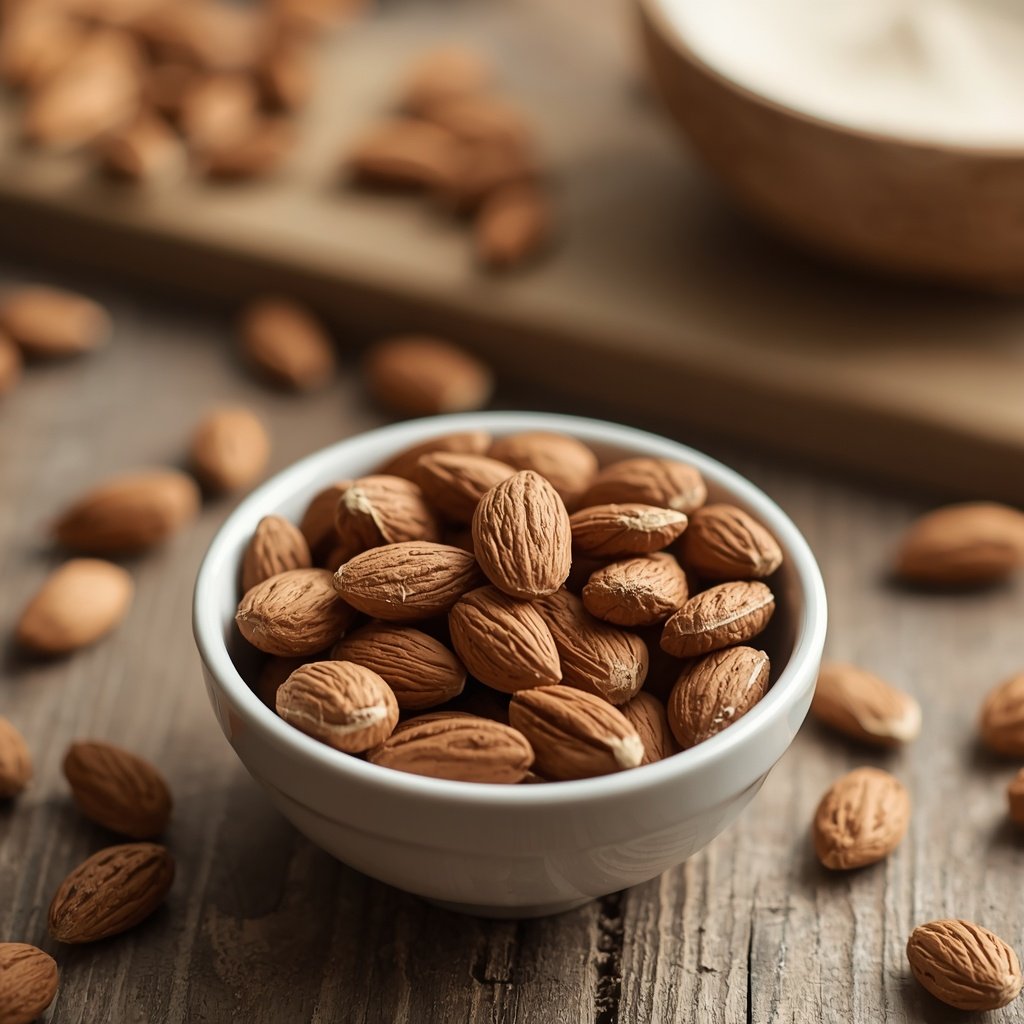
Quick Answer: 50g of almonds is about 41 whole almonds and roughly 289 calories. That’s a fairly large handful, not the small snack-pack amount most people picture, since a standard 1oz (28g) serving is only about 23 almonds. Use the calculator below to convert almond count and grams.
Almonds: Count ↔ Grams Calculator
Type in either box — the other updates automatically. Based on an average whole almond weighing about 1.2g.
50g of Almonds: Full Nutrition Facts
| Nutrient | Amount per 50g |
|---|---|
| Calories | ~289 kcal |
| Protein | ~10.6g |
| Fat | ~25g |
| Carbohydrates | ~9.9g |
| Fiber | ~5.5g |
Keep reading for how 50g compares with the standard 1oz serving, why almond calories add up faster than people expect, and how almonds compare with other nuts.
50g vs the Standard Almond Serving
| Amount | Almond Count | Calories |
|---|---|---|
| 1oz (28g) — standard serving | ~23 almonds | ~164 kcal |
| 50g — large handful | ~41 almonds | ~289 kcal |
| 100g | ~82 almonds | ~579 kcal |
Most nutrition labels are built around the 28g serving, but a real-world “handful” people grab is often closer to 40 to 50g. That gap is easy to underestimate, since almonds are compact and don’t feel like much food by volume compared with how many calories they carry.
Why Almond Calories Add Up Quickly
Almonds are calorie-dense because nearly three-quarters of their calories come from fat, most of it the unsaturated kind associated with heart health. That density is useful for a small, filling snack, but it also means a few extra handfuls eaten without measuring can add several hundred unlogged calories to a day, similar to how easy it is to underestimate a poured serving of overnight oats toppings.
Almonds vs Other Nuts
At roughly 578 calories per 100g, almonds sit in the middle of the nut family: lower than macadamias and pecans, but similar to cashews and slightly higher than pistachios. Their combination of fiber, protein, and unsaturated fat makes them a common pick in structured eating plans, including several of the snack ideas in our good snacks for diabetics guide.
Fitting Almonds Into a Calorie Budget
At about 289 calories, a 50g portion of almonds is a substantial snack rather than a light one, so it’s worth weighing rather than eyeballing if you’re following a set target like our 1500 calorie meal plan. A smaller 15 to 20g portion, closer to 12 to 16 almonds, is a more moderate snack-sized amount for most calorie goals.
Frequently Asked Questions
About 41 whole almonds, based on an average almond weighing roughly 1.2g.
About 289 calories, with roughly 25g of fat, 10.6g of protein, and 5.5g of fiber.
It’s a large handful rather than a light snack, since the standard serving size is 28g (about 23 almonds). 50g can still fit a calorie budget if it’s planned for rather than eaten on top of other snacks.
About 23 whole almonds, which is the standard nutrition label serving size at roughly 164 calories.
Because almost three-quarters of their calories come from fat, mostly unsaturated fat, which packs more calories per gram than protein or carbohydrates.
Final Answer: How Many Almonds Is 50g
50g of almonds is about 41 whole almonds and roughly 289 calories, noticeably more than the standard 28g (23-almond) serving most labels are based on. Almonds pack a lot of calories into a small volume, so weighing or counting a portion is a more reliable habit than grabbing a “handful” and assuming it’s the labeled serving size.