
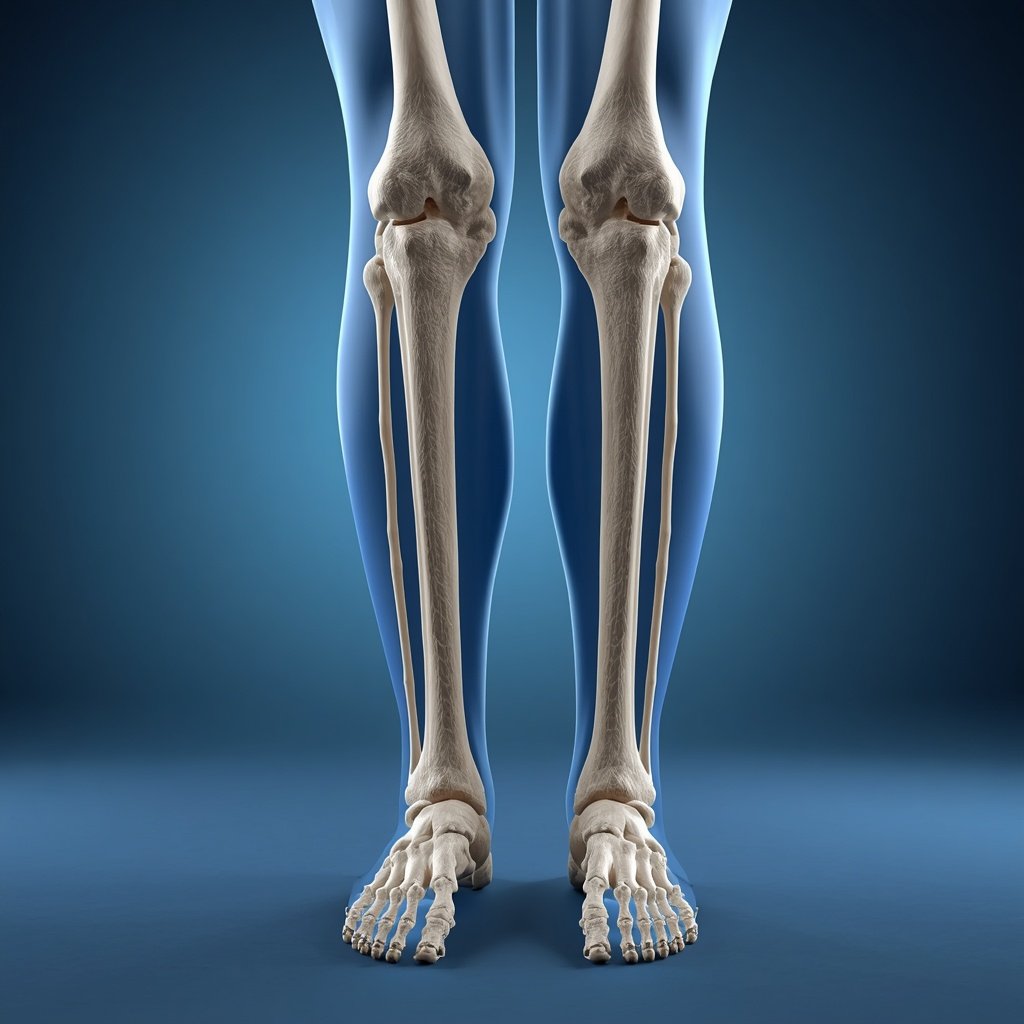
Quick Answer: How many bones are in the human leg? The leg has 4 bones: the femur (thigh bone), the patella (kneecap), and the tibia and fibula in the lower leg. If you include the ankle and foot, each lower limb has 30 bones, or 60 for both legs.
The 4 Bones of the Leg
| Bone | Location | Main Role |
|---|---|---|
| Femur | Thigh, hip to knee | Longest and strongest bone in the body; carries body weight |
| Patella | Front of the knee | Protects the knee and improves the leverage of the thigh muscles |
| Tibia | Lower leg, inner side (shin bone) | Carries most of the body’s weight below the knee |
| Fibula | Lower leg, outer side | Thin support bone; stabilizes the ankle and anchors muscles |
In strict anatomical terms, the “leg” means only the section between the knee and the ankle, which has 2 bones (the tibia and fibula). In everyday use, though, most people mean the whole limb from hip to ankle, which has 4. Keep reading for the full lower limb count, how the leg bones work, and common leg bone injuries.
How Many Bones Are in the Whole Lower Limb?
| Section | Bones | Count |
|---|---|---|
| Thigh | Femur | 1 |
| Knee | Patella | 1 |
| Lower leg | Tibia, fibula | 2 |
| Ankle and heel | Tarsal bones | 7 |
| Foot | Metatarsals | 5 |
| Toes | Phalanges | 14 |
| Total per side | 30 |
The two lower limbs hold 60 of the 206 bones in the adult human body, and 52 of those are in the feet and ankles alone. The hip bone that the femur connects to belongs to the pelvis, which is covered in our guide to how many bones are in the human pelvis.
The Femur: The Body’s Longest and Strongest Bone
The femur makes up roughly a quarter of a person’s height and can withstand huge loads during running and jumping. Its rounded head fits into the hip socket, forming a ball-and-socket joint, while its lower end forms the top of the knee. The powerful muscles that move it, including the quadriceps and the gluteus maximus, are some of the largest in the body, as covered in our look at the strongest muscle in the human body.
Common Leg Bone Injuries and Conditions
- Tibial stress fractures: small cracks in the shin bone caused by repeated impact, common in runners and people who increase training too quickly.
- Shin splints: pain along the inner edge of the tibia from overuse, often an early warning sign before a stress fracture.
- Hip fractures: breaks at the top of the femur, most common in older adults with weakened bones after a fall.
- Kneecap dislocation: the patella slides out of its groove, usually from a twisting movement or direct blow.
- Osteoporosis: thinning bone raises the risk of fractures throughout the leg, especially at the hip.
Building activity gradually is the best way to avoid overuse injuries like stress fractures. Long distances such as a marathon involve tens of thousands of impacts, as our guide to how many steps is a marathon shows. Persistent bone pain, swelling, or trouble bearing weight should be checked by a healthcare professional.
Leg Bones vs Arm Bones
The leg mirrors the arm: one bone above the knee (like the humerus above the elbow) and two below. The leg’s bones are thicker and denser because they carry the body’s full weight, and the leg adds the kneecap, giving it 4 bones to the arm’s 3. Our guide to how many bones are in the human arm breaks down the upper limb the same way.
Frequently Asked Questions
The leg has 4 bones: the femur, patella, tibia, and fibula. Including the ankle and foot, each lower limb has 30 bones.
2 bones: the tibia, or shin bone, and the thinner fibula on the outer side.
The femur, or thigh bone, which is also the longest and strongest bone in the whole body.
60 bones in total: 30 in each lower limb, including the femur, kneecap, lower leg, ankle, foot, and toes.
Yes. The patella, or kneecap, is a small bone that sits inside a tendon in front of the knee joint.
Final Answer: How Many Bones Are in the Human Leg
The human leg has 4 bones: the femur, patella, tibia, and fibula. Including the ankle and foot, each lower limb has 30 bones, or 60 for both legs. Because these bones carry your full body weight, building activity gradually and keeping bones strong with exercise and good nutrition helps prevent the most common injuries.