
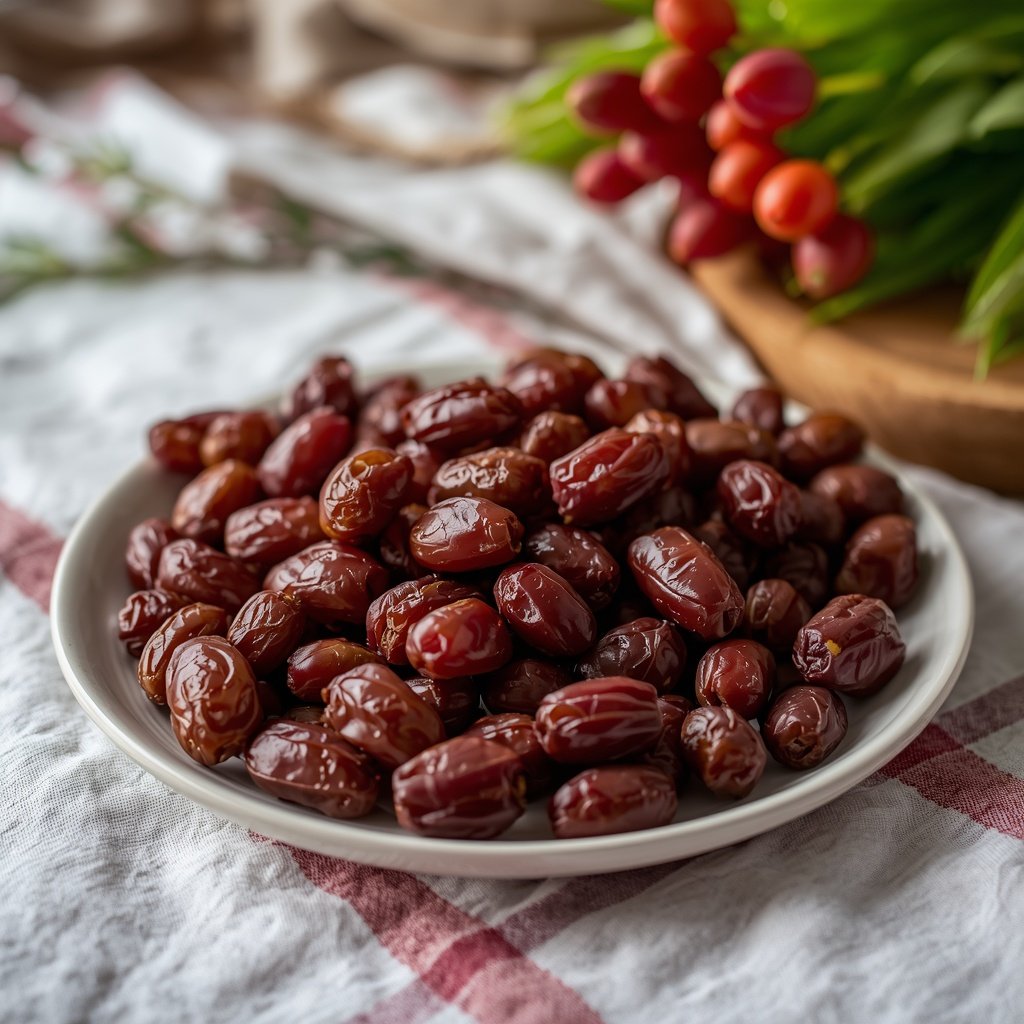
Quick Answer: How many dates is 100g depends heavily on the variety — for large Medjool dates, 100g is about 4 dates; for smaller Deglet Noor dates, 100g is closer to 12–13 dates. Medjool dates can weigh three times as much per piece as Deglet Noor, so checking which variety you have matters more than for most fruits. Use the calculator below for your date type.
Dates: Grams ↔ Count Calculator
Type in either box — the other updates automatically. Pitted vs unpitted and individual date size shift the exact weight.
Dates by Variety: Quick Reference Table
| Date Variety | Avg Weight Each | Count Per 100g |
|---|---|---|
| Medjool | ~24g | ~4 dates |
| Medium/mixed | ~15g | ~6–7 dates |
| Deglet Noor | ~8g | ~12–13 dates |
The gap between varieties here is unusually large compared with most fruit — Medjool dates are roughly three times heavier per piece than Deglet Noor, so a recipe or nutrition label that just says “dates” without specifying variety leaves a lot of room for error. Keep reading for calories, how dates compare to other dried fruit, and tips for measuring without a scale.
How Many Dates Is 100g?
The honest answer is: it depends entirely on which date variety you’re using. Medjool dates, the large, soft, caramel-like dates commonly sold individually or in small trays, average around 24g each — so 100g is only about 4 dates. Deglet Noor dates, the smaller, firmer, more common supermarket variety often sold in blocks or pre-chopped, average closer to 8g each, meaning 100g is closer to 12–13 dates.
This is a much wider range than you’ll see with most fruits, where variety typically shifts the count by a few pieces rather than tripling it. If a recipe simply calls for “100g dates” without naming the variety, it’s worth checking which type is more common in that cuisine — Medjool dates dominate US grocery stores and premium snacking, while Deglet Noor is more common in baking and packaged date products.
Why Medjool and Deglet Noor Differ So Much
Medjool dates are grown to be eaten fresh out of hand — soft, large, and syrupy, closer to a dried fig in texture than a typical dried fruit. Deglet Noor dates are firmer and drier, historically bred for a longer shelf life and easier processing into chopped or baking-ready formats. The size difference isn’t a quality issue; it reflects two genuinely different products serving different purposes in the kitchen.
100g of Dates: Calories and Nutrition
100g of dates (either variety, since nutrition content per gram is similar) contains approximately 280 calories, along with about 75g of carbohydrates, 66g of natural sugar, 7g of fiber, and meaningful amounts of potassium.
| Nutrient | Amount per 100g |
|---|---|
| Calories | ~280 kcal |
| Carbohydrates | ~75g |
| Sugars | ~66g |
| Fiber | ~7g |
| Protein | ~2g |
| Potassium | ~656mg |
Dates are notably higher in natural sugar than most other dried fruit — a byproduct of how sweet the fresh fruit is to begin with. Because of this, 100g (even though it might only be 4 Medjool dates) is a fairly concentrated dose of natural sugar, worth keeping in mind if you’re tracking intake closely.
How Dates Compare to Other Dried Fruit
Gram for gram, dates sit toward the higher end of the sugar and calorie range among common dried fruits — similar to raisins per gram, and noticeably sweeter than dried apricots or dried mango, which tend to have a slightly better fiber-to-sugar ratio. What sets dates apart is the piece-size variability — a “serving” of 2–3 Medjool dates is a very different amount of fruit than 2–3 Deglet Noor dates, which isn’t the case with most other dried fruit.
Practical Examples
A popular natural sweetener trick — blending 2–3 pitted Medjool dates into a smoothie or energy ball recipe instead of using refined sugar — typically adds about 50–70g of dates, or roughly 140–195 calories, which is easy to underestimate since it “feels” like using whole fruit rather than added sugar. A standard bag of pre-chopped Deglet Noor dates sold for baking, often listed as “8 oz” (227g), contains somewhere around 28 individual dates given their smaller size.
Dates are also a common addition to overnight oats recipes as a natural sweetener, usually chopped and stirred in rather than left whole — knowing the gram weight per date helps keep the sweetness level consistent from batch to batch.
Frequently Asked Questions
It depends on the variety: about 4 Medjool dates or about 12–13 Deglet Noor dates make up 100g.
100g of dates contains approximately 280 calories and about 66g of natural sugar, regardless of variety.
A Medjool date typically weighs around 24g, though large ones can weigh 30g or more.
Medjool dates are grown to be eaten fresh out of hand and are naturally larger and softer, while Deglet Noor dates are bred to be firmer, smaller, and better suited to baking and processing.
Neither is clearly healthier — both are naturally sweet dried fruits with similar sugar density. Dates provide slightly more fiber and potassium per 100g.
There’s no universal number, but 2–3 Medjool dates (or 5–6 Deglet Noor) is a commonly cited moderate serving, given their concentrated natural sugar content.
Final Answer: How Many Dates Is 100g
How many dates is 100g comes down almost entirely to variety: about 4 Medjool dates or 12–13 Deglet Noor dates, with medium-sized dates landing around 6–7. That’s a much wider spread than most fruits show, so checking which type you’re working with matters more here than for almost any other dried fruit conversion. Either way, 100g delivers roughly 280 calories and 66g of natural sugar — for precise portions, weighing is more reliable than counting pieces.