
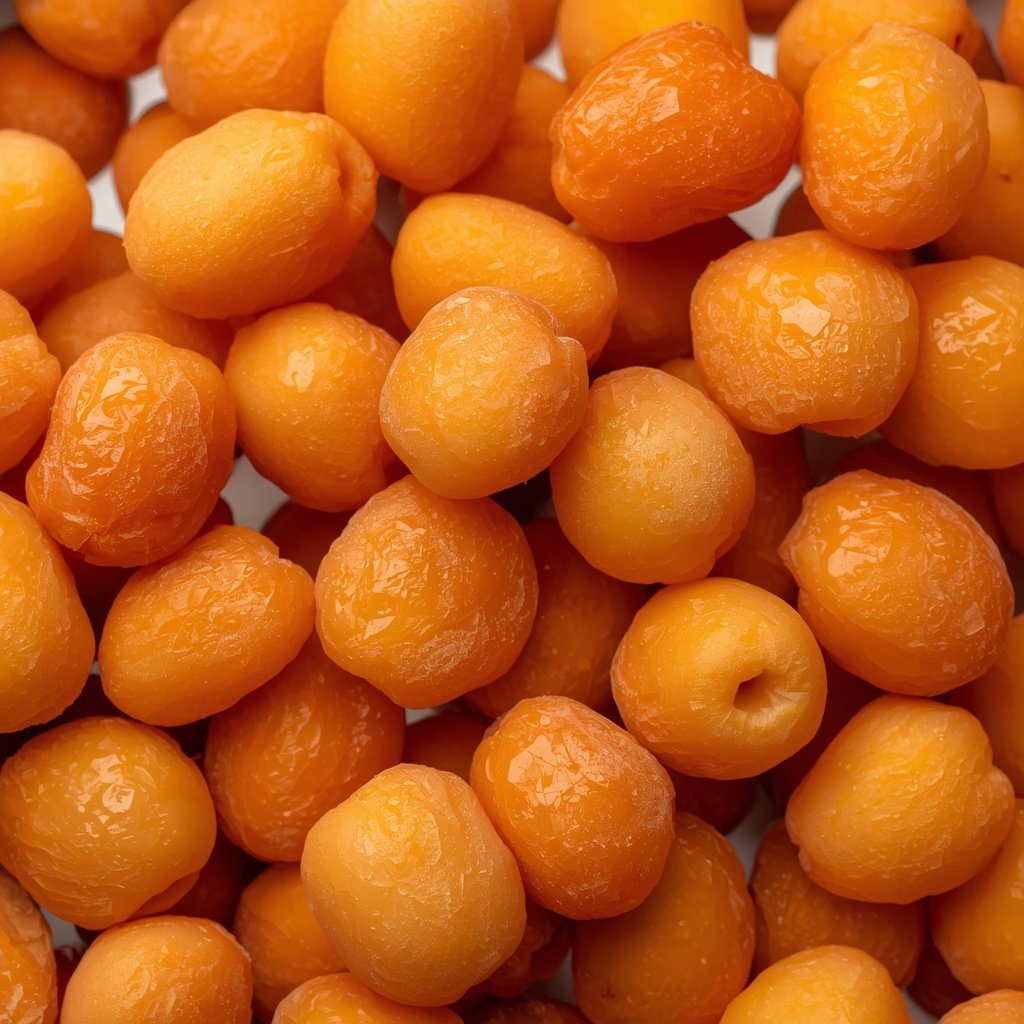
Quick Answer: 100g of dried apricots is about 10–14 pieces, depending on size — smaller Turkish-style apricots run closer to 14 per 100g, while larger, plumper ones are closer to 10. That’s roughly ¾ cup and about 240 calories. Use the calculator below for your specific apricot size.
Dried Apricots: Grams ↔ Pieces Calculator
Type in either box — the other updates automatically. Piece size varies by brand and drying method, so weigh on a scale for exact portions.
Dried Apricots: Quick Reference Table
| Apricot Size | Avg Weight Each | Pieces Per 100g |
|---|---|---|
| Small (Turkish-style) | ~7g | ~14 pieces |
| Medium | ~8.5g | ~11–12 pieces |
| Large / plump | ~10g | ~10 pieces |
These are practical estimates rather than fixed rules — drying method, moisture content, and brand all shift the exact piece weight. Keep reading for cup conversions, full nutrition facts, and tips for measuring without a scale.
How Many Dried Apricots Is 100g?
A 100g serving of dried apricots is a fairly generous portion — larger than the small handful most people picture when they think of a “serving” of dried fruit. The most common commercial dried apricots (the soft, orange, Turkish-style halves found in most grocery stores) weigh around 7 to 8 grams each, so 100g works out to roughly 13 to 14 pieces. Larger or plumper varieties, sometimes sold as “jumbo” dried apricots, can weigh closer to 10g each, bringing the count down to about 10 pieces for the same 100g.
Because dried apricots are typically sold as pitted halves rather than whole fruit, “one piece” almost always means one half — not a whole apricot. This matters if you’re counting pieces from a recipe or nutrition label that assumes a specific size.
Why Piece Count Varies So Much
Unlike a packaged, machine-cut food, dried apricots come from real fruit that varies naturally in size before drying even begins. A few factors explain most of the variation you’ll see between brands:
- Apricot variety — some cultivars are naturally smaller and denser than others.
- Drying method — sun-dried apricots tend to be firmer and slightly smaller than the softer, moister apricots dried with sulfur dioxide (the bright-orange kind common in supermarkets).
- Moisture content — softer, chewier dried apricots retain more water and weigh more per piece than drier, firmer ones.
- Organic vs. conventional — organic dried apricots (usually darker brown, without sulfur dioxide) are often smaller and lighter than their bright-orange counterparts.
None of this makes piece-counting useless — it’s a perfectly good everyday estimate — but if you’re tracking calories or sugar precisely, weighing your specific apricots once and adjusting your mental count accordingly will serve you better than assuming every bag behaves the same. The same logic applies to other dried fruit and nut portions — our guide on how many walnuts is 30g runs into the same size-variation issue.
100g of Dried Apricots in Cups
By volume, 100g of dried apricots is approximately ¾ cup when the halves are loosely packed into a measuring cup. A full cup of dried apricot halves weighs closer to 130g, so if a recipe calls for a cup and you only have a kitchen scale handy, aim for roughly that amount.
| Amount | Approximate Weight |
|---|---|
| ¼ cup | ~33g |
| ½ cup | ~65g |
| ¾ cup | ~98g |
| 1 cup | ~130g |
As with piece count, cup measurements shift depending on how tightly the apricots are packed and whether they’re whole halves or chopped into smaller pieces — chopped dried apricots settle more densely and fit more weight into the same cup. Chopped dried apricots are also a common topping for oatmeal, where a tablespoon or two adds sweetness without needing a full serving.
Calories and Nutrition in 100g of Dried Apricots
Drying concentrates everything in the fruit — sugar, fiber, and calories included — since removing water shrinks the apricot down without changing what’s inside it. A 100g serving of dried apricots contains approximately:
| Nutrient | Amount per 100g |
|---|---|
| Calories | ~240 kcal |
| Carbohydrates | ~62g |
| Sugars | ~53g |
| Fiber | ~7g |
| Protein | ~3.4g |
| Fat | ~0.5g |
| Potassium | ~1,160mg |
| Iron | ~2.7mg |
The standout figures here are potassium and iron — dried apricots are one of the more potassium-dense dried fruits available, and they carry a meaningfully higher iron content than most other dried fruit, which is part of why they’re often recommended for people watching their iron intake. The sugar content is also worth noting: at 53g of sugar per 100g, dried apricots are naturally sweet, and it’s easy to eat more than intended when snacking straight from the bag.
Is 100g of Dried Apricots a Healthy Serving?
100g is on the larger side for a single sitting. Most nutrition guidance treats a “serving” of dried fruit as closer to 30–40g (roughly a small handful, or 4–5 pieces), since dried fruit is far more calorie- and sugar-dense than the fresh fruit it came from. A 100g portion of dried apricots delivers meaningfully more sugar than 100g of fresh apricots — not because anything was added, but because drying removes the water that made the fresh version feel more filling for the same volume.
That doesn’t make dried apricots a food to avoid — they’re a genuinely useful source of fiber, potassium, and iron, and pairing a smaller portion (4–5 pieces) with a protein source like plain Greek yogurt or a handful of walnuts is a reasonable way to build a more balanced snack. If you’re also tracking other dried-fruit portions, our guide on how many pieces of dried mango is 30g covers a similar measurement question for a different fruit.
How to Measure 100g of Dried Apricots Without a Scale
If you don’t have a kitchen scale handy, a few rough methods can get you close:
- Count method: 12–13 standard supermarket halves is a reasonable estimate for 100g.
- Cup method: ¾ cup of loosely packed halves is close to 100g.
- Handful method: a full, rounded handful for most adults lands somewhere between 60–90g — useful for a rough gut-check, but not precise enough for strict tracking.
For anything beyond casual snacking — recipes, calorie tracking, or comparing brands — weighing is still the only method that removes the guesswork, since apricot size genuinely does vary enough between bags to throw off a piece-count estimate by several grams either way.
Common Mistakes When Measuring Dried Apricots
- Assuming “one apricot” means a whole fruit. Most dried apricots are sold as pitted halves, so a piece count based on “whole apricots” will be roughly double what you actually need.
- Treating all brands as identical. Organic, sun-dried, and sulfured varieties can differ in size and moisture enough to shift piece counts by several pieces per 100g.
- Confusing dried and fresh apricot portions. 100g of dried apricots is far more concentrated in sugar and calories than 100g of fresh apricots, even though the weight is the same. The same weight-vs-volume confusion shows up with other fruit — see our guide on how many raspberries is 100g for a fresh-fruit comparison.
Frequently Asked Questions
About 10–14 pieces (halves), depending on size — smaller Turkish-style apricots run closer to 14, larger ones closer to 10.
100g of dried apricots contains approximately 240 calories, along with about 53g of natural sugar and 7g of fiber.
100g of dried apricots is approximately ¾ cup when loosely packed. A full cup weighs closer to 130g.
It’s a larger-than-typical serving. Most nutrition guidance suggests closer to 30–40g (about 4–5 pieces) as a standard dried-fruit serving, since drying concentrates both calories and sugar.
Almost always a half. Most commercial dried apricots are sold as pitted halves, so piece counts in recipes and nutrition labels typically refer to halves, not whole fruit.
Final Answer
100g of dried apricots is approximately 10–14 pieces (halves), roughly ¾ cup, and about 240 calories — a larger-than-typical serving compared to the 30–40g most nutrition guidance treats as a standard portion. Piece count varies with apricot size, variety, and drying method, so treat the count as a practical estimate rather than an exact figure. For consistent portions — especially if you’re tracking sugar or calories — weighing your dried apricots with a kitchen scale remains the most reliable method.