
Quick Answer
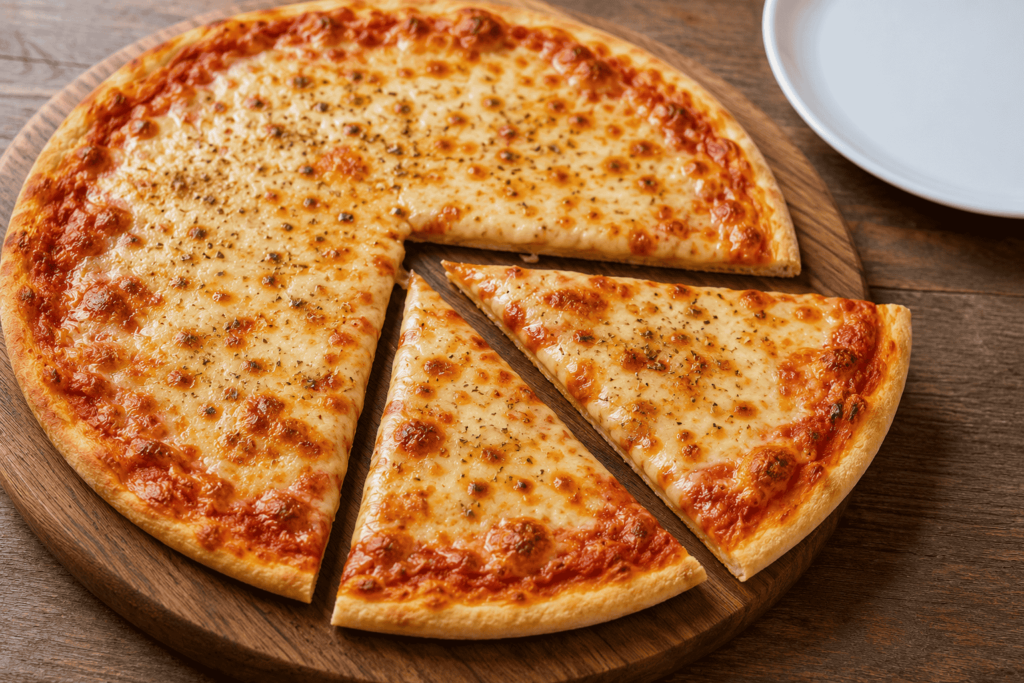
For most regular cheese pizzas, 500 calories equals about 2 slices, since one standard slice typically contains 250–300 calories. However, the exact number of slices depends on the pizza’s crust thickness, toppings, cheese amount, and slice size. Thin-crust pizzas may allow slightly more than 2 slices, while deep-dish or meat-loaded pizzas may reach 500 calories in just 1 to 1½ slices. Use the calculator below for your specific pizza type.
Pizza Slices ↔ Calories Calculator
Type in either box — the other updates automatically. Calories per slice vary by size, brand, and toppings; treat this as a practical estimate.
Pizza Calories by Slice: Quick Reference Table
| Pizza Type | Calories per Slice | Slices for 500 Calories |
|---|---|---|
| Cheese | 250–300 | 1.7–2 slices |
| Pepperoni | 300–350 | 1.4–1.7 slices |
| Veggie | 220–280 | 1.8–2.3 slices |
| Meat Lovers | 350–450 | 1.1–1.4 slices |
| Thin Crust | 180–250 | 2–2.8 slices |
| Stuffed Crust | 320–420 | 1.2–1.6 slices |
| Deep Dish | 400–600 | 0.8–1.3 slices |
| Margherita | 220–280 | 1.8–2.3 slices |
These are general estimates based on standard restaurant and takeout pizza slices. Keep reading for a breakdown by pizza type, size, and slice weight, plus tips for staying close to a 500-calorie pizza meal.
How Many Slices of Pizza Is 500 Calories?
The number of pizza slices that equal 500 calories depends on the type of pizza, crust thickness, cheese amount, toppings, and slice size. While two slices of regular cheese pizza are a good general estimate, other varieties can contain significantly more or fewer calories.
Below is a breakdown of the most common pizza types.
Cheese Pizza
A regular slice of cheese pizza typically contains 250–300 calories. That means:
- 250 calories per slice = 2 slices for 500 calories
- 300 calories per slice = about 1⅔ slices for 500 calories
For most medium or large hand-tossed cheese pizzas, 2 slices is a practical estimate for a 500-calorie serving.
Pepperoni Pizza
Pepperoni adds extra fat and calories, making it one of the most popular yet higher-calorie pizza options.
A typical slice of pepperoni pizza contains approximately 300–350 calories.
This means:
- 300 calories per slice = about 1⅔ slices for 500 calories
- 350 calories per slice = about 1½ slices for 500 calories
If you’re watching your calorie intake, 1½ slices of pepperoni pizza is often close to the 500-calorie mark.
Thin Crust Pizza
Thin-crust pizza generally contains fewer calories because it uses less dough than regular or deep-dish pizza.
A typical slice contains around 180–250 calories.
That equals:
- 180 calories per slice = about 2¾ slices for 500 calories
- 220 calories per slice = about 2¼ slices
- 250 calories per slice = 2 slices
Depending on the toppings, you can usually enjoy 2 to nearly 3 slices of thin-crust pizza for around 500 calories.
Deep-Dish Pizza
Deep-dish pizza is usually the most calorie-dense option because of its thick crust, larger amount of cheese, and generous toppings.
A single slice commonly contains 400–600 calories, depending on the recipe and serving size.
This means:
- 400 calories per slice = about 1¼ slices for 500 calories
- 500 calories per slice = 1 slice
- 600 calories per slice = less than 1 slice exceeds 500 calories
With many restaurant-style deep-dish pizzas, one large slice may provide approximately 500 calories or more, making portion size especially important if you’re tracking your daily calorie intake.
Does Pizza Size Change the Number of Slices?
Yes. Pizza size can affect how many slices equal 500 calories, but not because the pizza has more slices overall. What matters most is the size of each slice. Larger pizzas are often cut into larger wedges, and some restaurants serve oversized slices that contain significantly more calories than a standard serving.
The crust thickness, amount of cheese, and toppings also influence calorie content, so two slices from different-sized pizzas may not provide the same number of calories.
Small Pizza
A small pizza is typically 8–10 inches in diameter and is often cut into 6 slices.
Because the slices are smaller, each one usually contains 180–250 calories for a plain cheese pizza.
Approximate servings for 500 calories:
- 180 calories per slice = about 2¾ slices
- 220 calories per slice = about 2¼ slices
- 250 calories per slice = 2 slices
You can generally eat 2 to 3 slices of a small cheese pizza for around 500 calories.
Medium Pizza
A medium pizza usually measures 12 inches and is commonly cut into 8 slices.
A typical cheese slice contains approximately 250–300 calories.
For 500 calories, that’s about:
- 2 slices at 250 calories each
- About 1⅔ slices at 300 calories each
For most medium pizzas, 2 slices is a reasonable estimate.
Large Pizza
A large pizza is typically 14 inches and is also often cut into 8 slices, making each slice larger than those from a medium pizza.
Depending on the crust and toppings, one slice may contain 280–350 calories.
This means:
- 280 calories per slice = about 1.8 slices
- 320 calories per slice = about 1½ slices
- 350 calories per slice = about 1.4 slices
With a large pizza, 1½ to 2 slices usually equals around 500 calories.
Extra-Large Pizza
Extra-large pizzas generally measure 16–18 inches and are cut into 8, 10, or 12 slices, depending on the restaurant.
Although they’re cut into more pieces, each slice can still be quite large and may contain 320–450 calories or more.
For approximately 500 calories:
- 320 calories per slice = about 1½ slices
- 400 calories per slice = about 1¼ slices
- 450 calories per slice = just over 1 slice
If you’re eating extra-large or restaurant-style pizza, don’t rely on the number of slices alone. Always consider slice size, crust thickness, and toppings, as these have a much bigger impact on calories than the pizza’s overall diameter.
Tip: Two slices of pizza don’t always contain the same number of calories. A thin-crust medium pizza and a deep-dish extra-large pizza can differ by hundreds of calories per slice, making portion size just as important as the type of pizza you choose.
How Many Grams in One Slice of Pizza?
While many people track pizza by calories per slice, the weight of each slice in grams also plays a major role. In general, heavier slices contain more dough, cheese, and toppings, which usually means more calories.
The exact weight varies depending on the pizza’s size, crust, and toppings, but the averages below provide a good reference.
Average Cheese Pizza Slice Weight
A standard slice of cheese pizza from a medium or large pizza typically weighs 100–125 grams (3.5–4.4 ounces).
Typical nutrition:
- Weight: 100–125 g
- Calories: 250–300
- 500 calories: About 2 regular slices
This is the serving size most nutrition labels and calorie calculators use when estimating pizza calories.
Thin Crust Slice Weight
Thin-crust pizza contains less dough, making each slice lighter than a regular crust pizza.
A typical thin-crust slice weighs approximately 70–100 grams (2.5–3.5 ounces).
Typical nutrition:
- Weight: 70–100 g
- Calories: 180–250
- 500 calories: About 2 to nearly 3 slices
Although the slices are lighter, generous cheese or meat toppings can still increase the calorie count.
Deep-Dish Slice Weight
Deep-dish pizza is much heavier because of its thick crust and generous layers of cheese and toppings.
A typical slice weighs around 180–250 grams (6.3–8.8 ounces).
Typical nutrition:
- Weight: 180–250 g
- Calories: 400–600
- 500 calories: Approximately 1 slice
Restaurant-style deep-dish pizzas can vary significantly, with some slices containing well over 600 calories.
Large vs. Small Slices
The size of the slice affects both its weight and calorie content.
General comparison:
- Small pizza slice: 80–100 g
- Medium pizza slice: 100–120 g
- Large pizza slice: 120–150 g
- Extra-large or oversized restaurant slice: 150–200+ g
As slice weight increases, calories usually increase as well. For example, two small slices may contain roughly the same calories as one oversized restaurant slice.
Tip: If you’re tracking calories or macros, weighing your pizza with a kitchen scale is more accurate than counting slices. Since slice sizes vary widely between restaurants and brands, using the weight in grams provides a much better estimate of calorie intake.
How Many Slices of Pizza Is 300 Calories?
If you’re trying to stay within a 300-calorie meal or snack, the number of pizza slices you can eat depends on the pizza type. While one slice of some pizzas is close to 300 calories, lighter options like thin crust may allow a little more than one slice.
Cheese Pizza
A standard slice of cheese pizza contains approximately 250–300 calories.
That means:
- 250 calories per slice = about 1.2 slices for 300 calories
- 300 calories per slice = 1 slice
For most restaurants and frozen pizzas, 1 regular slice of cheese pizza is about 300 calories.
Since cheese is one of the biggest contributors to pizza calories, understanding common cheese serving sizes can also help estimate calorie intake. See our guide on How Many Slices of Cheese in a Pound.
Pepperoni Pizza
Pepperoni pizza is usually higher in calories because of the added meat and fat.
A typical slice contains 300–350 calories.
This means:
- 300 calories per slice = 1 slice
- 350 calories per slice = about 0.9 slice
If you’re limiting yourself to 300 calories, one average slice of pepperoni pizza is usually the maximum.
Thin Crust Pizza
Thin-crust pizza generally contains 180–250 calories per slice, making it the lowest-calorie option among common pizza styles.
For approximately 300 calories:
- 180 calories per slice = about 1⅔ slices
- 220 calories per slice = about 1⅓ slices
- 250 calories per slice = about 1.2 slices
With thin-crust cheese pizza, you can often enjoy 1¼ to 1½ slices while staying close to 300 calories, depending on the toppings and slice size.
Quick comparison: Around 300 calories equals 1 slice of regular cheese or pepperoni pizza, while thin-crust pizza may allow slightly more than one slice because it contains less dough and fewer calories per serving.
What Affects Pizza Calories?
Not all pizza slices contain the same number of calories. Even if two slices look similar, their calorie content can vary depending on the ingredients and how they’re prepared. Understanding these factors can help you estimate portions more accurately and stay within your calorie goals.
Crust Thickness
The crust is one of the biggest factors affecting pizza calories. Thicker crusts use more dough, which adds carbohydrates and calories.
Here’s how different crusts compare:
- Thin crust: Usually the lowest in calories.
- Regular hand-tossed crust: Moderate calorie content.
- Pan pizza: Higher in calories due to a thicker, softer crust.
- Deep-dish or stuffed crust: Among the highest in calories because of extra dough and fillings.
Choosing a thin crust can often save 50–150 calories per slice compared to a deep-dish or stuffed crust.
Cheese Amount
Cheese is another major contributor to pizza calories. While it provides protein and calcium, it also adds fat and calories.
More cheese means:
- Higher calorie content.
- More saturated fat.
- Larger serving weight.
A pizza with extra cheese can contain 50–100 more calories per slice than a regular cheese pizza.
If you’re interested in comparing different types of cheese, our Cottage Cheese Nutrition guide explains how cottage cheese compares nutritionally with other cheeses.
You can also read our comparison of Cheese vs Ghee to understand how different dairy fats affect calories and nutrition.
Meat Toppings
Meat toppings are generally more calorie-dense than vegetables because they contain more fat and protein.
Higher-calorie toppings include:
- Pepperoni
- Sausage
- Bacon
- Ground beef
- Ham
A meat lovers pizza can have 100–200 more calories per slice than a plain cheese pizza, depending on the amount of meat.
Vegetable Toppings
Vegetable toppings add flavor, vitamins, minerals, and fiber with very few extra calories.
Common low-calorie toppings include:
- Mushrooms
- Bell peppers
- Onions
- Tomatoes
- Spinach
- Olives (slightly higher due to healthy fats)
A veggie pizza is often lower in calories than a meat pizza while still being filling and nutritious.
Cooking Style
The way a pizza is prepared can also affect its calorie content.
For example:
- Wood-fired pizzas often use lighter toppings and thinner crusts.
- Pan pizzas absorb more oil during baking.
- Stuffed-crust pizzas contain additional cheese inside the crust.
- Restaurant pizzas are often larger and heavier than frozen or homemade pizzas.
As a result, two pizzas with the same toppings can have very different calorie counts depending on how they’re made.
Pizza Weight vs. Calories
In general, heavier pizza slices contain more calories because they include more dough, cheese, sauce, and toppings. While exact values vary by recipe, the table below provides a useful estimate.
| Slice Weight (g) | Approximate Calories |
|---|---|
| 70 g | 170–200 calories |
| 90 g | 220–250 calories |
| 110 g | 270–320 calories |
| 130 g | 320–380 calories |
| 150 g | 380–450 calories |
| 180 g | 450–550 calories |
Tip: If you’re counting calories, weighing your pizza slice is often more accurate than counting slices alone. A 150-gram slice can contain nearly twice as many calories as a 70-gram slice, even if both are considered “one slice.” Using a kitchen scale provides the most reliable estimate for calorie tracking.
Tips for Eating Pizza Within a 500-Calorie Meal
Enjoying pizza doesn’t have to derail your healthy eating goals. With a few smart choices, you can enjoy a satisfying meal while staying around 500 calories. The key is to pay attention to the crust, toppings, portions, and what you eat alongside your pizza.
Choose Thin Crust
If you’re trying to keep calories in check, thin-crust pizza is usually your best option. Because it contains less dough than regular or deep-dish pizza, each slice typically has fewer calories.
Benefits of choosing thin crust include:
- Lower calorie content per slice.
- Less refined carbohydrates.
- More room in your calorie budget for a side salad or healthy topping.
- Often allows you to eat 2 to nearly 3 slices while staying close to 500 calories.
When available, choose thin crust over stuffed or deep-dish crust for a lighter meal.
Limit High-Calorie Toppings
Toppings can significantly increase the calorie content of your pizza. While meats and extra cheese add flavor, they also add fat and calories.
To keep your meal closer to 500 calories:
- Choose regular cheese instead of extra cheese.
- Limit high-calorie meats like pepperoni, sausage, bacon, and ground beef.
- Skip creamy sauces or cheese-stuffed crusts.
- Opt for lighter toppings when possible.
Lower-calorie toppings include:
- Mushrooms
- Bell peppers
- Onions
- Tomatoes
- Spinach
- Broccoli
- Jalapeños
These vegetables add flavor, fiber, and nutrients with minimal calories.
Lean protein foods like chicken can also make calorie-controlled meals more filling. Learn how cooking changes serving sizes in Chicken Breast Weight Raw vs Cooked Difference.
Seafood is another high-protein, lower-calorie option. See How Much Protein in One Shrimp for serving information.
Pair with Salad
A simple salad is one of the easiest ways to make your meal more filling without adding many calories.
For example, instead of eating:
- 3 slices of cheese pizza (750–900 calories)
Try:
- 2 slices of cheese pizza (500–600 calories)
- A side salad with leafy greens, tomatoes, cucumbers, and a light vinaigrette.
The extra fiber and vegetables help increase fullness while keeping your overall meal more balanced.
Watch Portion Sizes
Even healthy pizza choices can become high in calories if portions aren’t controlled.
To manage portion sizes:
- Start with 1–2 slices and wait a few minutes before deciding if you need more.
- Eat slowly to give your body time to recognize fullness.
- Use a smaller plate to help control serving sizes.
- Check nutrition information when ordering from restaurants or buying frozen pizza.
- If possible, weigh your slice with a kitchen scale for a more accurate calorie estimate.
Remember that slice sizes vary widely between restaurants. Two small slices from one pizza may contain fewer calories than a single oversized slice from another.
Pizza can absolutely fit into a healthy eating pattern when portions are controlled. If you’re following a structured eating plan, check out our 1500 Calorie Meal Plan for more balanced meal ideas.
Healthy eating tip: A balanced 500-calorie pizza meal can be as simple as 2 slices of thin-crust or regular cheese pizza paired with a side salad and water. Choosing lighter toppings and practicing portion control lets you enjoy pizza while supporting your nutrition goals.
If your goal is increasing protein intake, our guide on How Many Eggs Equal 30g Protein can help you build high-protein meals.
Greek yogurt is another filling, high-protein food. Learn the serving sizes in How Many Grams in a Cup of Greek Yogurt.
Frequently Asked Questions
For most regular cheese pizzas, 500 calories equals about 2 slices. The exact number depends on the crust, toppings, and slice size.
Usually, yes. Two standard slices of cheese pizza typically provide 500–600 calories. Thin-crust pizza may allow slightly more than two slices, while deep-dish pizza may reach 500 calories in just one slice.
A standard slice of pizza generally contains:
Cheese: 250–300 calories
Pepperoni: 300–350 calories
Thin crust: 180–250 calories
Deep dish: 400–600 calories
A typical pizza slice weighs 70–150 grams, depending on the pizza size and crust. Deep-dish and extra-large slices can weigh 180 grams or more.
For most pizzas, 300 calories equals about 1 slice. With thin-crust pizza, you may be able to eat 1¼ to 1½ slices for around 300 calories.
Yes. Pepperoni pizza usually contains 300–350 calories per slice, while a regular cheese pizza typically has 250–300 calories per slice because of the added meat and fat.
Yes. Choose thin crust, limit high-calorie toppings, watch your portion size, and pair your pizza with a salad to fit it into a calorie-controlled eating plan.
Thin-crust veggie pizza is generally one of the lowest-calorie choices because it uses less dough and vegetable toppings instead of higher-calorie meats.
Final Answer
Most regular cheese pizza slices contain approximately 250–300 calories, so 500 calories is typically equal to about 2 slices. However, the exact amount varies depending on the crust thickness, toppings, cheese, cooking style, and slice size. Thin-crust pizza may allow slightly more than two slices, while deep-dish or meat-loaded pizza can reach 500 calories in just one slice. If you’re following a medically prescribed protein-restricted diet, our Low Protein Diet Recipes guide offers meal ideas that can help you stay within your nutrition goals. For the most accurate calorie estimate, always check the nutrition information provided by the restaurant or pizza brand, as calorie counts can vary considerably between different pizzas.