
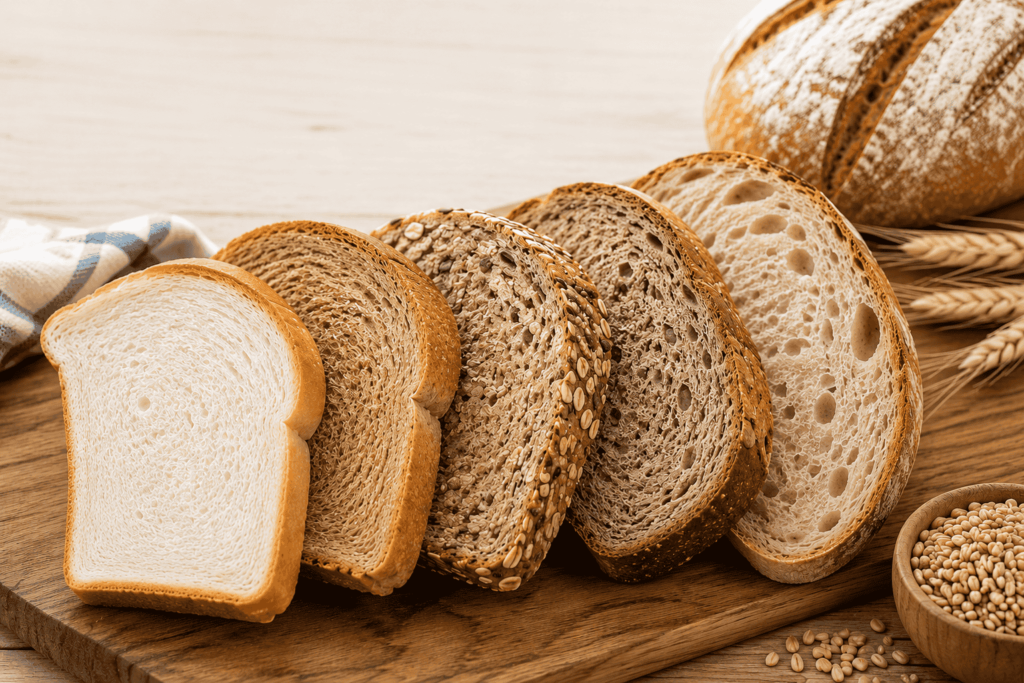
Quick Answer: According to USDA dietary guidelines, 1 regular slice of bread usually counts as 1 ounce-equivalent (oz-eq) of grains. The exact amount depends on the bread’s size, thickness, and weight — thin sandwich bread is typically 1 oz-eq, while extra-thick artisan slices, Texas toast, or specialty breads may count as more. This is a USDA serving concept, not a measure of physical weight — see How Many Slices of Bread Is 100g? if you’re looking for actual gram weight instead.
Bread Serving Size Chart
| Bread Type | Typical Serving | Grain Ounce Equivalent |
|---|---|---|
| White bread | 1 regular slice | 1 oz-eq |
| Whole wheat bread | 1 regular slice | 1 oz-eq |
| Multigrain bread | 1 regular slice | 1 oz-eq (varies by slice size) |
| Rye bread | 1 regular slice | 1 oz-eq |
| Sourdough | 1 regular sandwich slice | 1 oz-eq (large artisan slices may be more) |
| Texas toast | 1 thick slice | About 2 oz-eq (varies by brand and thickness) |
| Artisan bread | 1 large thick slice | 1.5–2 oz-eq (depends on size and weight) |
These values are general USDA-based serving estimates. Bread thickness, density, and serving size can vary by brand and bakery, so checking the nutrition label is the best way to determine how many ounce-equivalents your bread provides. Keep reading for what “1 ounce of grains” actually means, how other bread products compare, and how many grain ounces you should eat per day.
How Many Ounces of Grains Is One Slice of Bread?
For most people, one regular slice of bread counts as 1 ounce-equivalent (oz-eq) of grains under the USDA dietary guidelines. This measurement isn’t based solely on the bread’s physical weight. Instead, it represents a standard serving of grain foods that helps people track their daily grain intake.
In many cases, a single slice of sandwich bread—whether white or whole wheat—is considered one grain ounce-equivalent. However, thicker or larger slices may provide more than one ounce-equivalent, while very thin slices may count as less. If you’re comparing grain servings with the actual weight of bread, see our guide on How Many Slices of Bread Is 100g? to learn how bread weight varies by slice size and type.
Regular Sliced Bread
A standard slice of sandwich bread is generally equal to 1 ounce-equivalent of grains. This includes the majority of packaged breads sold in grocery stores, making it easy to count servings when following USDA recommendations.
If a nutrition label lists 1 slice as one serving, it will usually represent 1 oz-eq of grains, unless the bread is unusually large or dense.
Whole Wheat Bread
A regular slice of whole wheat bread also typically counts as 1 ounce-equivalent of grains. The fact that it’s made with whole grains doesn’t change the ounce-equivalent serving size.
The main difference is nutritional quality. Whole wheat bread provides more fiber, vitamins, minerals, and other nutrients than refined bread, making it the healthier choice for meeting your daily grain recommendations.
White Bread
A standard slice of white bread is also generally considered 1 ounce-equivalent of grains. Although it contributes the same grain serving as whole wheat bread, it is usually made from refined flour, which contains less fiber and fewer naturally occurring nutrients.
If you’re choosing between the two, whole grain varieties are typically recommended because they offer greater nutritional value while counting the same toward your daily grain intake.
Does Thickness Change the Grain Ounce?
Yes. The thickness and size of the slice can affect how many ounce-equivalents of grains it provides.
For example:
- A regular sandwich slice is usually 1 oz-eq.
- Thick-cut artisan bread or Texas toast may count as more than 1 oz-eq per slice.
- Very thin bread slices may provide less than 1 oz-eq.
Because bread sizes vary between brands and bakeries, the most accurate way to determine the grain ounce-equivalent is to check the serving size on the nutrition label or compare it with USDA serving guidance. If you’re tracking your grain intake closely, relying on the package information is more accurate than judging by appearance alone.
What Does “1 Ounce of Grains” Actually Mean?
The phrase “1 ounce of grains” can be confusing because it doesn’t usually refer to the actual weight of a slice of bread or other grain food. Instead, the USDA uses a standard measurement called an ounce-equivalent (oz-eq) to make it easier to compare different grain foods and track daily grain intake.
For example, one slice of bread, ½ cup of cooked rice, or one small tortilla can each count as 1 ounce-equivalent of grains, even though they weigh different amounts. If you’re wondering how much ½ cup or 1 cup of cooked rice actually weighs in grams, check out our guide on How Many Grams in 1 Cup Cooked Rice? White, Brown, Basmati Guide.
What Is an Ounce-Equivalent (oz-eq)?
An ounce-equivalent (oz-eq) is a standardized serving used by the USDA to measure grain foods. It allows different types of grains to be counted consistently, regardless of their size, shape, or weight.
Examples of 1 ounce-equivalent of grains include:
- 1 regular slice of bread
- ½ cup cooked rice
- ½ cup cooked pasta
- 1 small tortilla (about 6 inches)
- 1 cup ready-to-eat breakfast cereal (varies by type)
This system makes it easier to combine different grain foods throughout the day while meeting your recommended intake.
Why Grains Are Measured This Way
Grain foods come in many forms, making it difficult to compare them by weight alone. A slice of bread, a bowl of oatmeal, and cooked pasta all have different weights and volumes but can provide a similar serving of grains.
Using ounce-equivalents gives everyone a simple way to measure grain intake across a variety of foods. It also helps people follow dietary recommendations without needing to weigh every serving.
When you see a recommendation like “eat 6 ounces of grains per day,” it means 6 ounce-equivalents, not 6 ounces by weight. For example, eating two slices of bread, one-half cup of cooked rice, and one-half cup of oatmeal would provide approximately 4 ounce-equivalents of grains, even though the foods have very different weights.
Do All Bread Slices Count as 1 Ounce of Grains?
No. While most regular slices of bread count as 1 ounce-equivalent (oz-eq) of grains, not every slice is the same. The grain serving depends on the bread’s size, thickness, density, and serving size. A thin slice may provide less than 1 oz-eq, while a thick bakery-style slice can count as more than one serving.
If you’re tracking your grain intake, don’t assume every slice is equal. Checking the nutrition label or comparing the serving size with USDA guidance will give you the most accurate estimate.
Thin Sandwich Bread
Thin sandwich bread is designed to be lighter and smaller than standard sandwich bread. Depending on the brand, one thin slice may provide less than 1 ounce-equivalent of grains, meaning you may need two slices to equal about one standard grain serving.
These breads are often marketed as lower-calorie options, so their grain content is typically reduced as well.
Regular Sandwich Bread
A standard slice of sandwich bread is the benchmark used in most USDA examples. One regular slice is generally equal to 1 ounce-equivalent of grains, making it easy to count toward your daily grain recommendation.
Most packaged white, whole wheat, rye, and multigrain sandwich breads fall into this category.
Thick Artisan Slices
Artisan breads are often cut much thicker than regular sandwich bread and tend to be denser. Because of their larger serving size, one thick slice may provide 1.5 to 2 ounce-equivalents of grains, depending on its weight and dimensions.
If you’re eating bakery-style sourdough, country bread, or rustic loaves, one slice may count as more than a single grain serving.
Homemade Bread
Homemade bread doesn’t have standardized serving sizes, so the grain ounce-equivalent depends entirely on how large and thick each slice is. A thin homemade slice may be close to 1 oz-eq, while a large, thick slice could count as significantly more.
If you’re baking at home and want to track your grain intake accurately, consider weighing the loaf, dividing it by the number of slices, or comparing each slice to a standard store-bought serving. This provides a much more reliable estimate than judging by appearance alone.
How Many Grain Ounces Are Other Bread Products?
Bread isn’t the only food that counts toward your daily grain intake. Many common bakery and bread products also contribute ounce-equivalents (oz-eq) of grains. The values below are general USDA serving estimates and may vary slightly depending on the product’s size and brand.
| Bread Product | Typical Serving | Grain Ounce Equivalent |
|---|---|---|
| Half bagel | ½ medium bagel | 1 oz-eq |
| English muffin | 1 whole English muffin | 2 oz-eq (½ muffin = 1 oz-eq) |
| Hamburger bun | 1 regular bun | 2 oz-eq |
| Hot dog bun | 1 regular bun | 2 oz-eq |
| Small tortilla | 1 tortilla (about 6 inches) | 1 oz-eq |
| Large tortilla | 1 tortilla (about 10–12 inches) | 2–4 oz-eq, depending on size |
| Pita bread | 1 small (about 6½ inches) | 1 oz-eq |
| Dinner roll | 1 small roll | 1 oz-eq |
| Biscuit | 1 small biscuit (about 2 inches) | 1 oz-eq |
Tip: Serving sizes vary between manufacturers and restaurants. Larger bakery-style bagels, oversized tortillas, gourmet buns, and specialty breads often contain more grain ounce-equivalents than standard grocery-store versions. Checking the nutrition label is the most accurate way to determine how many grain servings you’re eating.
How Many Grain Ounces Should You Eat Per Day?
The USDA recommends eating a certain number of ounce-equivalents (oz-eq) of grains each day based on your age, sex, and physical activity level. These recommendations include both whole and refined grains, although at least half of your daily grain intake should come from whole grains whenever possible.
The table below provides general daily grain recommendations for healthy individuals.
| Group | Recommended Daily Grain Intake |
|---|---|
| Women (ages 19–50) | 6 oz-eq per day |
| Men (ages 19–50) | 8 oz-eq per day |
| Children (ages 4–8) | 4–5 oz-eq per day |
| Older adults (51+ years) | Women: 5 oz-eq/day Men: 6 oz-eq/day |
Activity Level Affects Your Needs
These recommendations are based on general dietary patterns and can vary depending on your activity level. People who are more physically active may require additional calories and, therefore, more grain servings to meet their energy needs. Those with lower activity levels may need fewer servings.
Remember that quality matters as much as quantity. Choosing whole grain foods—such as whole wheat bread, overnight oats made from rolled oats, brown rice, and whole grain pasta—provides more fiber, vitamins, and minerals than refined grains, helping support overall health while meeting your daily grain recommendations.
Whole Grains vs. Refined Grains
Both whole grains and refined grains count toward your daily grain intake, but they differ significantly in their nutritional value. Understanding the difference can help you make healthier choices without changing how you count grain servings.
Which Is Healthier?
Whole grains are generally the healthier option. They contain all parts of the grain kernel—the bran, germ, and endosperm—providing more fiber, vitamins, minerals, and beneficial plant compounds.
Examples of whole grain foods include:
- Whole wheat bread
- Oatmeal
- Brown rice
- Whole grain pasta
- Whole grain tortillas
Refined grains, such as white bread and white rice, have had the bran and germ removed during processing. This gives them a softer texture and longer shelf life but also removes much of the natural fiber and nutrients. Although many refined grain products are enriched with certain vitamins and minerals, they still contain less fiber than whole grains.
For better overall nutrition, the USDA recommends making at least half of the grains you eat whole grains.
Does the Ounce-Equivalent Change?
No. The ounce-equivalent (oz-eq) does not change based on whether the grain is whole or refined.
For example:
- One regular slice of whole wheat bread = 1 oz-eq
- One regular slice of white bread = 1 oz-eq
The serving size remains the same, but the nutritional benefits are different. Choosing whole grains allows you to meet your daily grain recommendations while also increasing your intake of fiber and other important nutrients.
Common Mistakes When Measuring Grain Servings
It’s easy to miscalculate your grain intake if you rely on appearance alone. Here are some of the most common mistakes people make:
Assuming Every Bread Slice Is Identical
Not all slices of bread are the same size. Thin sandwich bread, standard sandwich bread, and thick artisan bread can contain very different amounts of grains. A larger slice may count as more than one ounce-equivalent.
Ignoring Package Serving Sizes
Many people assume one slice always equals one grain serving, but some brands define a serving differently. Always check the nutrition label to see the recommended serving size and compare it with USDA guidance.
Confusing Weight Ounces with Grain Ounce-Equivalents
One of the biggest misconceptions is thinking that 1 ounce of grains means 1 ounce by weight. In reality, the USDA uses ounce-equivalents (oz-eq), which are standardized serving sizes rather than actual weight measurements.
Counting Oversized Bakery Bread as One Serving
Large bakery loaves, artisan bread, and Texas toast often contain much more grain than a standard sandwich slice. Treating these oversized slices as a single serving can lead to underestimating your total grain intake. When in doubt, check the serving size or compare the slice with standard USDA examples.
Frequently Asked Questions
Yes, most regular slices of bread count as 1 ounce-equivalent (oz-eq) of grains according to USDA dietary guidelines. However, very thin slices may count as less than 1 oz-eq, while thick artisan or bakery-style slices may count as more than one ounce-equivalent.
If each slice is a standard serving, two slices of bread provide approximately 2 ounce-equivalents (oz-eq) of grains. This is typical for a regular sandwich made with standard sliced bread. Larger or thicker slices may increase the total grain serving.
A regular slice of whole wheat bread usually counts as 1 ounce-equivalent of grains, just like a regular slice of white bread. The difference is that whole wheat bread contains more fiber and nutrients, making it a healthier choice while contributing the same grain serving.
No. Toasting bread does not change its grain ounce-equivalent. A slice of toast counts the same as the same slice before it was toasted because heating removes moisture, not grains. A regular slice remains approximately 1 oz-eq whether it’s fresh or toasted.
It depends on the size of the slice. A homemade slice that is similar in size to standard sandwich bread is generally about 1 ounce-equivalent of grains. Larger or thicker homemade slices may count as 1.5 to 2 oz-eq or more.
The easiest way is to check the nutrition label and serving size on the package. If your bread is homemade or purchased from a bakery without labeling, compare the slice with a standard sandwich slice or estimate based on its size and thickness. When precision matters, USDA serving guidance and the product’s serving information provide the most reliable estimate.
Final Answer
For most people, one regular slice of bread equals 1 ounce-equivalent (oz-eq) of grains, making it a simple way to track your daily grain intake. However, not all bread slices are the same. Thick artisan bread, Texas toast, oversized bakery loaves, and some specialty breads may provide more than 1 oz-eq per slice, while thin sandwich bread may provide less. When you’re unsure, check the nutrition label and serving size for the most accurate information. To get the greatest nutritional benefits, choose whole grain bread whenever possible, as it provides more fiber, vitamins, and minerals while counting the same toward your daily grain recommendations.