
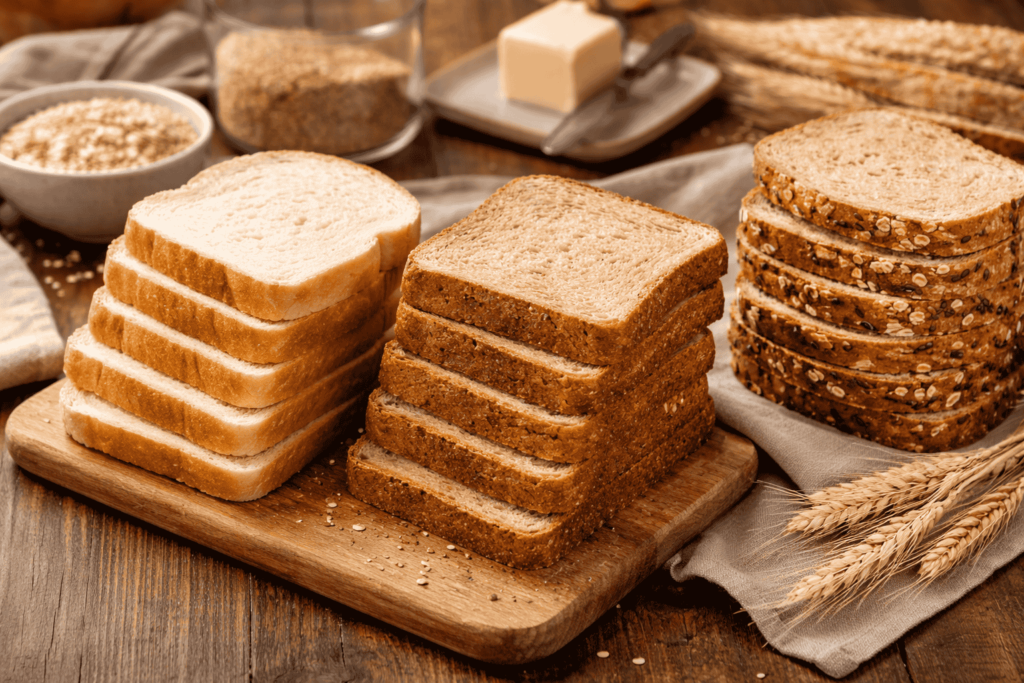
Quick Answer: 100g of bread is roughly 2.5 to 4 slices, depending on thickness and type — thin sandwich bread needs about 4 slices, while thick artisan-style bread only needs 2–3. For most standard packaged bread, 3 slices ≈ 100g is a solid average estimate. Use the calculator below to check your specific bread.
Bread Slices ↔ Grams Calculator
Type in either box — the other updates automatically. Slice weight varies by brand and thickness, so weigh your own bread when precision matters.
100g of Bread in Slices: Quick Reference Table
| Bread Type | Avg Weight per Slice | 100g Equals |
|---|---|---|
| White bread | 25g | 4 slices |
| White (thick) | 40g | 2.5 slices |
| Whole wheat | 35g | 3 slices |
| Brown bread | 30g | 3–4 slices |
This table gives you a quick reference to estimate your portions. If you know the approximate weight of one slice, you can easily calculate how many slices equal 100g. Use this as a guideline, but remember that exact values may differ slightly based on brand and preparation.
Bread Slice Weight Explained (Why It Varies)
Thin vs Thick Bread Slices
Bread slices can vary significantly in weight depending on how they are cut. Thin slices typically weigh around 20–25 grams, medium slices around 30–35 grams, and thick slices can go up to 40 grams or more.
This means if you're eating thin sandwich bread, you might need 4–5 slices to reach 100g. On the other hand, thick artisan bread may only require 2–3 slices.
The variation is even more noticeable when comparing homemade bread to store-bought options, where slicing is less uniform.
White vs Brown vs Whole Wheat Bread
The type of bread also affects weight. White bread is usually lighter because it is more processed and airy. Whole wheat bread tends to be denser, meaning fewer slices may reach 100g.
Brown bread falls somewhere in between, but its weight can vary depending on ingredients and brand.
If you're already tracking food portions, understanding cheese slice portion breakdowns can help you build more accurate meal plans.
How to Measure 100g of Bread at Home
Using a Kitchen Scale
The most accurate way to measure bread is by using a kitchen scale. Simply place your slices on the scale until you reach 100 grams.
This method is especially useful if you are following a strict diet or calorie plan. It removes guesswork and ensures consistency in portion sizes.
For beginners, digital scales are easy to use and provide precise readings within seconds.
Estimating Without a Scale
If you don't have a scale, you can estimate using slice count. For standard bread, 3 slices are usually close to 100g.
You can also use visual comparison. For example, a small stack of 3–4 slices typically equals around 100 grams.
Pairing bread with protein sources can improve meal balance. For example, knowing how much turkey fits typical portions helps in portion control.
Calories and Nutrition in 100g of Bread slices
On average, 100g of bread contains around 240–270 calories, depending on the type.
The macronutrient breakdown includes:
- Carbohydrates: 45–50g
- Protein: 7–9g
- Fiber: varies (higher in whole wheat)
Whole wheat bread generally offers more fiber, which helps with digestion and keeps you full longer. However, since bread is mostly carbohydrate-based, pairing it with a protein-rich food can make your meal more balanced and satisfying.
For example, adding a high-protein dairy option to your meals can improve satiety, support muscle health, and create a more complete nutritional profile alongside bread.
Does Bread Slice Size Affect Calories?
Yes, slice size directly affects calorie intake. A thicker slice contains more calories because it weighs more.
For example, 2 thick slices may contain the same calories as 4 thin slices. This is why measuring by weight (grams) is more accurate than counting slices.
If you're tracking protein intake alongside carbs, understanding shrimp protein values per serving can help balance your meals better.
Bread Types and Their Weight Differences
White Bread
White bread is soft and airy, making it lighter per slice. This means you may need more slices to reach 100g compared to denser bread types. It is usually made from refined flour, which gives it a fluffy texture but lower fiber content. Because of this, it digests faster and may not keep you full for long, so portion control becomes more important if you're tracking calories.
Whole Wheat Bread
Whole wheat bread is denser and heavier. It often contains more nutrients and fiber, making it a popular choice for healthier diets. The added fiber slows digestion, helping you feel fuller for longer. Since each slice weighs more than white bread, you typically need fewer slices to reach 100g, making it easier to manage portions.
Multigrain Bread
Multigrain bread includes seeds and grains, which increase its weight. Even a single slice can be quite filling and heavier than regular bread. Ingredients like flaxseeds, oats, and sunflower seeds not only add weight but also improve nutritional value by providing healthy fats and extra fiber. This makes multigrain bread a good option for balanced meals.
Homemade Bread slices vs Store-Bought Bread
Homemade bread does not have standard slice sizes, which can make portion tracking less accurate. Some slices may be thicker or uneven, especially if cut by hand. The ingredients used at home can also affect density and weight.
Store-bought bread, on the other hand, is more consistent in size and weight because it is machine-sliced. This makes it easier to estimate how many slices equal 100g, especially when following a diet or tracking calories.
Common Portion Conversions
Understanding portion conversions helps you track intake more accurately.
- 50g of bread ≈ 1.5–2 slices
- 60g of bread ≈ 2 slices
- 200g of bread ≈ 6–8 slices
- 1 slice of bread ≈ 25–35g
These estimates depend on thickness and type but give a useful reference for everyday use.
If you measure other foods too, knowing Greek yogurt weight conversions for meals can improve your accuracy.
Is 100g of Bread Too Much?
Whether 100g of bread is too much depends on your diet and activity level.
For active individuals or those trying to gain weight, 100g is a normal portion. It provides energy and supports performance.
For weight loss, it may be slightly high if not balanced with protein and fats. In this case, portion control becomes important.
The key is balance. Bread itself is not unhealthy, but portion size and overall diet matter.
Tips for Managing Bread Portions
Managing bread intake is simple with a few practical strategies:
- Choose thinner slices to control calories
- Switch to whole grain for more fiber
- Pair bread with protein to stay full longer
- Avoid mindless eating (like snacking directly from the pack)
Combining bread with protein-rich foods helps reduce hunger and improves overall nutrition.
Conclusion
So, how many slices of bread is 100g? The simple answer is around 2.5 to 4 slices, with an average of about 3 slices depending on thickness and type.
Because bread varies so much, the best way to stay accurate is by using a kitchen scale. This ensures consistency, especially if you're tracking calories or following a diet plan.
Understanding portion sizes, bread types, and weight differences helps you make better food choices. With a little awareness, you can easily manage your bread intake without confusion or guesswork.
Frequently Asked Questions
About 2.5 to 4 slices, depending on thickness and type.
Typically between 25g and 35g.
It depends on your diet and activity level.
Around 1.5 to 2 slices.
Yes, it is usually denser and heavier.
Yes, by estimating slice count, but it's less accurate.