
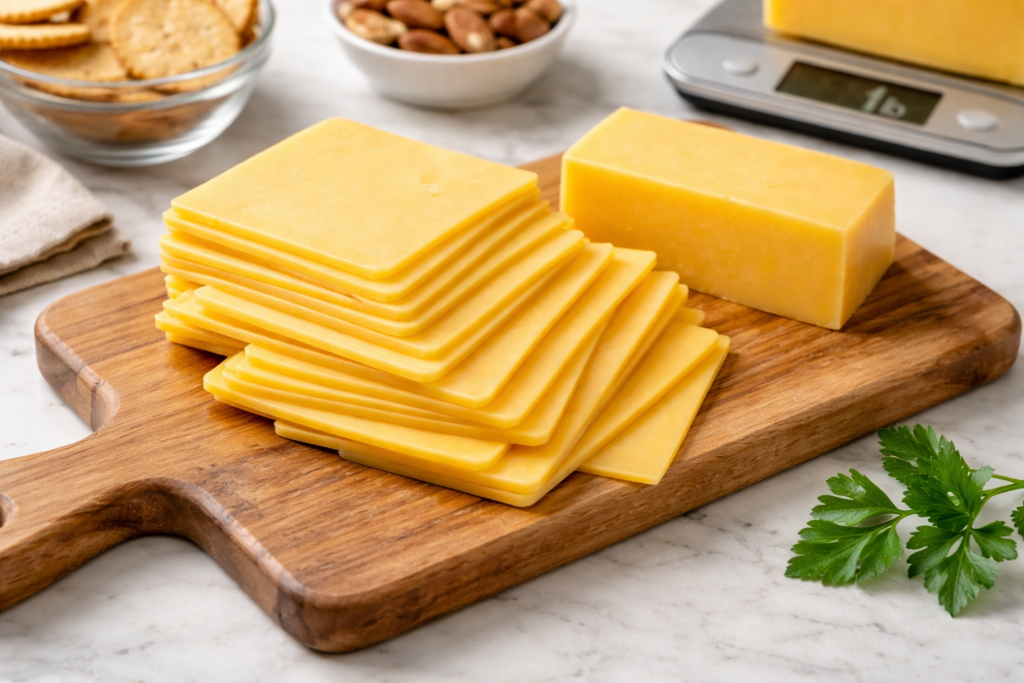
Quick Answer: A pound of sliced cheese (16 oz) typically yields about 16–20 slices, since most pre-sliced cheese weighs 0.75–1 oz per slice. Cheddar yields the most (up to 22 thin slices), while mozzarella yields the fewest (14–16) due to its heavier average slice. Use the calculator below for your specific cheese.
Cheese Slices ↔ Weight Calculator
Type in either box — the other updates automatically. Slice weight varies by brand and how thick the deli or packaging cuts it.
Cheese Slices Per Pound: Quick Reference Table
| Cheese Type | Average Slice Weight | Approximate Slices Per Pound |
|---|---|---|
| American Cheese | 0.75 – 1 oz | 16 – 20 slices |
| Cheddar Cheese | 0.7 – 0.9 oz | 18 – 22 slices |
| Swiss Cheese | 0.8 – 1 oz | 16 – 20 slices |
| Mozzarella | 1 – 1.1 oz | 14 – 16 slices |
| Provolone | 0.8 – 1 oz | 16 – 20 slices |
| Gouda | 0.8 – 1 oz | 16 – 18 slices |
Understanding the specific cheese you’re using can help you plan recipes accurately. If you are making a large batch of sandwiches or a cheese platter, knowing the approximate number of slices per pound saves time and reduces waste.
Deli Cheese Slices Per Pound
When buying cheese from a grocery store deli counter, the slice count may be slightly different. Deli cheese slices per pound often range from 16 to 20 slices, but deli workers sometimes cut cheese thinner than pre-packaged slices. This means you might get more slices per pound, especially with cheeses like cheddar, provolone, or Swiss.
Understanding these differences helps with meal planning, portion control, and recipe preparation. Whether you’re making sandwiches, preparing a cheese platter, or tracking nutrition, knowing roughly how many slices are in a pound makes it easier to estimate portions accurately.
Portioning Cheese for Health
Cheese is delicious, but it’s also calorie-dense, so portion control is important, especially for those tracking macronutrients or managing weight. A typical slice of cheese is about 1 ounce, providing roughly 100 calories, 7 grams of fat, and 6–7 grams of protein, though this varies by type.
For those focused on protein intake, pairing cheese with cottage cheese nutrition can be beneficial. Cottage cheese is lower in fat and high in protein, making it an ideal complement to regular sliced cheese in meals. For example, spreading a thin layer of sliced cheese on whole-grain bread alongside a side of cottage cheese can create a balanced, protein-rich breakfast or snack.
Cheese and Protein: How It Fits in Your Diet
Cheese isn’t just tasty—it’s a convenient source of protein and calcium. For people trying to meet their daily protein goals, incorporating cheese slices in moderation can help. When calculating protein intake, it’s essential to understand portion sizes. One slice of cheese can provide 6–7 grams of protein, so two slices add up to 12–14 grams—a helpful boost for meals or snacks.
Similarly, for those tracking meat portions, understanding equivalents is useful. For instance, learning how many slices of turkey is 2 oz can help you pair proteins correctly in sandwiches or wraps. Two ounces of turkey generally equals 2 thin slices, which is similar to portioning cheese for balanced meals. This knowledge helps maintain calorie control while ensuring adequate protein intake throughout the day.
Daily Habits That Complement Cheese Consumption
Including cheese in your diet can be part of a healthy lifestyle if combined with good nutrition habits. Select daily health habits that improve energy—such as staying hydrated, getting enough sleep, and incorporating a variety of protein sources—helps your body make the most of nutrient-dense foods like cheese.
For example, pairing cheese with vegetables or whole grains enhances satiety and provides additional nutrients. This aligns with daily health habits, because balanced meals support sustained energy levels throughout the day. Cheese doesn’t need to be eliminated from a health-conscious diet, but portion awareness ensures it contributes positively rather than excessively to calorie intake.
Creative Ways to Use Cheese Slices
Once you know how many slices of cheese are in a pound, you can plan meals more creatively:
- Sandwiches and Wraps: Layering 1–2 slices with lean protein like turkey or chicken can create a satisfying, balanced lunch.
- Salads: Cut cheese slices into strips or cubes for salads. Pair with greens, nuts, and fruits for extra flavor and nutrition.
- Snacks: Roll cheese slices with turkey or ham for high-protein snacks perfect for work or school.
- Cooking: Use slices in omelets, casseroles, or baked dishes to ensure even melting and consistent flavor distribution.
Keeping cheese versatile and paired with nutrient-dense foods supports better overall diet quality.
Cheese in Meal Planning
If you’re meal prepping or tracking macros, understanding cheese slices per pound can simplify calculations. For example, if a recipe calls for 4 ounces of cheese, you can quickly know that’s roughly 4 slices of standard pre-sliced cheese. This eliminates guesswork and helps maintain portion control across meals.
Additionally, for families or meal prep enthusiasts, buying cheese by the pound can be more economical than pre-packaged slices. You can slice your cheese to your preferred thickness, controlling portions and reducing packaging waste.
Combining Cheese with High-Protein Foods
Cheese works exceptionally well with other high-protein foods. Pairing it with turkey, chicken, eggs, or cottage cheese options can create meals that satisfy hunger and support muscle maintenance. For instance, a breakfast plate with a slice of cheese, scrambled eggs, and a side of cottage cheese provides a mix of protein types and textures, boosting satiety and keeping you energized for the morning.
For lunch, layering cheese slices in a whole-grain wrap with turkey and vegetables offers a balanced mix of protein, fats, and fiber. This is especially effective when paired with select daily health habits that improve energy, like a short walk or mindful hydration, which optimize digestion and energy throughout the day.
Tips for Storing and Slicing Cheese
Proper storage of cheese ensures freshness and maintains flavor. Store cheese in the refrigerator wrapped in wax paper, parchment, or reusable cheese paper, rather than plastic wrap, to prevent excess moisture buildup. Slicing cheese just before use helps maintain its texture, especially for softer varieties like mozzarella.
If you purchase cheese in bulk, using a kitchen scale and knowing how many slices of cheese in a pound allows for pre-portioned meal planning. This method minimizes waste and makes meal prep faster and more efficient, particularly for busy mornings or quick lunches.
Cheese and Balanced Nutrition
While cheese is often thought of as a treat, it’s nutrient-dense and offers essential vitamins like A, B12, calcium, and phosphorus. Combining cheese with other nutrient-rich foods supports overall wellness. For example, pairing cheese slices with fruits, vegetables, or whole grains creates a balanced plate that aligns with daily health habits that improve energy.
Cheese in moderation can also contribute to healthy bones due to its calcium content. Choosing the right type of cheese and portioning it carefully ensures you reap the benefits without overconsuming calories or saturated fat.
Conclusion
Knowing how many slices of cheese are in a pound is more than just trivia—it’s a practical tool for meal planning, portion control, and balanced nutrition. A pound of standard sliced cheese generally yields 16–20 slices, though this can vary depending on type and thickness. Using this knowledge, you can plan sandwiches, snacks, and meals more efficiently while pairing cheese with other protein-rich foods like turkey or cottage cheese.
By combining cheese with daily health habits that improve energy, you ensure your diet remains balanced and supports sustained energy throughout the day. Whether you’re prepping meals for the week, cooking for family, or simply enjoying cheese as a snack, understanding portions empowers you to make informed, healthy choices without sacrificing flavor.
Cheese doesn’t just taste good—it supports protein intake, adds calcium to your diet, and can even help with satiety when portioned correctly. With careful planning and attention to slice size, you can enjoy cheese as part of a healthful, delicious diet every day.
Frequently Asked Questions
A standard pound of pre-sliced cheese usually contains 16 slices, but this can vary depending on the thickness of each slice.
Yes. Softer cheeses like American or mozzarella slices may be slightly thicker, while harder cheeses like cheddar may yield more slices per pound.
Most pre-packaged slices are about 1/16 to 1/8 inch thick, but thickness can vary by brand or type.
Absolutely! Weigh your cheese on a kitchen scale and cut into slices of your desired thickness to know exactly how many slices are in a pound.
On average, one slice of cheese weighs around 28–30 grams.
Yes. Shredded cheese is less compact, so a pound of shredded cheese looks larger in volume than a pound of sliced cheese, but the weight is the same.
Keep it tightly wrapped in plastic or in an airtight container in the fridge. For longer storage, you can freeze slices individually with parchment paper between them.
Pingback: How Much Ham Per Person? (Bone-In, Boneless & Spiral) - purehealthmode