
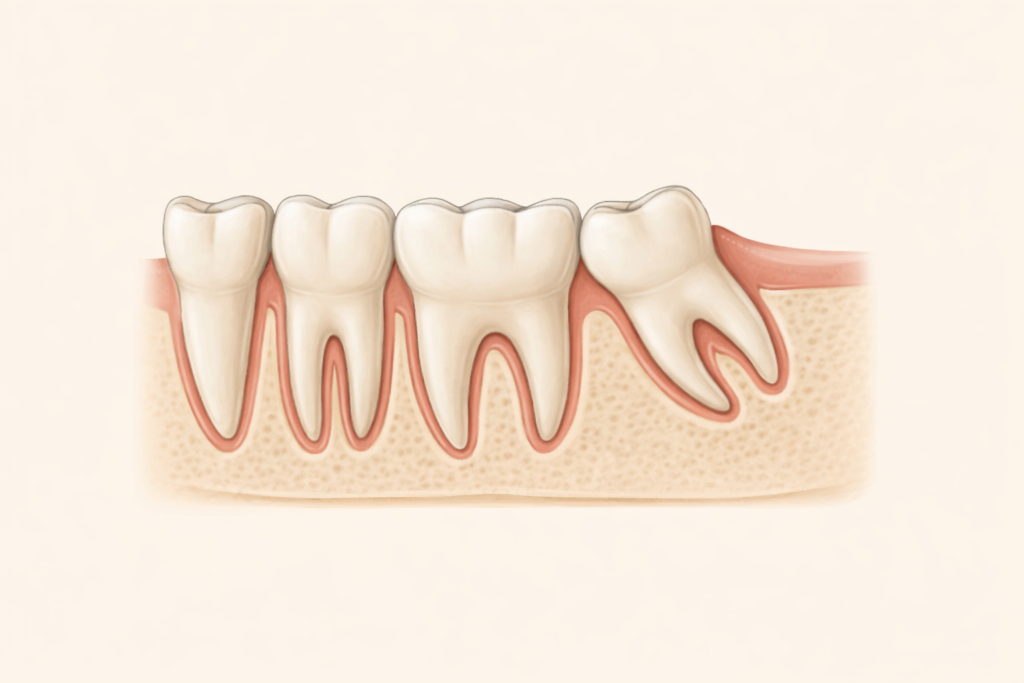
Wisdom teeth are the last set of molars that usually appear in the back of the mouth during late teenage years or early adulthood. Many people hear about them when a dentist mentions possible removal, while others experience discomfort as these teeth begin to emerge. However, there are still many questions surrounding wisdom teeth. Two of the most common are when do wisdom teeth come in and does everyone have wisdom teeth.
Understanding how wisdom teeth develop, when they erupt, and why some people never get them can help you take better care of your oral health and avoid complications.
Understanding What Wisdom Teeth Are and Why They Exist
Wisdom teeth are the third set of molars that grow at the very back of the mouth. Typically, a person has four wisdom teeth, with two located in the upper jaw and two in the lower jaw.
These teeth are believed to be remnants of our ancestors’ diets. Early humans consumed tougher foods such as raw plants, nuts, and meat, which required stronger chewing power. Extra molars helped grind these foods efficiently.
Over time, human diets and jaw sizes evolved. Modern diets contain softer foods, and human jaws have become slightly smaller. As a result, wisdom teeth often do not have enough space to grow properly, which can lead to crowding, pain, or impaction.
In some cases, emerging wisdom teeth may create pressure on surrounding teeth and gums, increasing the risk of dental issues like plaque buildup around the molars. Poor cleaning in these hard-to-reach areas can lead to problems such as Plaque on Teeth, which may eventually affect surrounding gum tissue.
When Do Wisdom Teeth Come In During Life?
The most common question people ask is when do wisdom teeth come in. For most individuals, it begins to erupt between the ages of 17 and 25. This period is often referred to as the “age of wisdom,” which is how these molars got their name.
However, the exact timing varies from person to person.
Typical Wisdom Teeth Eruption Timeline
Ages 15–17:
The roots of wisdom teeth begin forming beneath the gums, although they are usually not visible yet.
Ages 17–21:
Many people start noticing pressure or mild discomfort in the back of the mouth as the teeth begin pushing through the gums.
Ages 21–25:
Most wisdom teeth that are going to erupt will fully emerge during this stage.
After Age 25:
Some individuals may experience late eruption, while others may never develop wisdom teeth at all.
The eruption process can sometimes cause symptoms such as gum soreness, swelling, or jaw stiffness. These symptoms are often temporary but should be monitored, especially if pain becomes severe.
In certain cases, erupting wisdom teeth can also irritate surrounding gum tissue and contribute to conditions affecting Healthy Gums if proper hygiene is not maintained.
Signs That Wisdom Teeth Are Coming In
Not everyone experiences noticeable symptoms when wisdom teeth erupt. However, many people do notice certain changes in the back of their mouth.
Common signs include:
- Mild pain or pressure behind the last molars
- Gum swelling in the back of the mouth
- Difficulty opening the jaw fully
- Tenderness while chewing
- Bad breath or unpleasant taste
Sometimes the gums around the erupting tooth become irritated or inflamed. If bacteria accumulate in that area, it may lead to Swollen Gums, which can cause discomfort while eating or brushing.
Regular dental checkups can help identify wisdom teeth before they cause major problems.
Does Everyone Have Wisdom Teeth?
Another common question is does everyone have wisdom teeth. The answer is no.
While most people develop wisdom teeth, some individuals naturally do not have them. Research suggests that approximately 20–35% of people may be missing at least one wisdom tooth.
Reasons Some People Don’t Have Wisdom Teeth
There are several possible explanations for missing wisdom teeth.
Genetic Factors
Genetics play the biggest role. If your parents or grandparents did not have wisdom teeth, you may inherit the same trait.
Evolutionary Changes
Human jaws have gradually become smaller over thousands of years. Some scientists believe that future generations may completely lose wisdom teeth due to evolutionary changes.
Developmental Variations
Sometimes the tooth buds for wisdom teeth never form in the jaw during development.
Because of these factors, dentists frequently see patients who have only two wisdom teeth—or none at all.
What Happens If Wisdom Teeth Don’t Have Enough Space?
Even when wisdom teeth exist, they do not always grow normally. A common issue is impacted wisdom teeth.
An impacted tooth occurs when a wisdom tooth cannot fully emerge because there is not enough room in the jaw.
There are several types of impaction:
Horizontal Impaction
The tooth grows sideways and pushes into nearby teeth.
Vertical Impaction
The tooth tries to erupt but remains trapped under the gum.
Partial Eruption
Part of the tooth emerges while the rest remains covered by gum tissue.
Impacted wisdom teeth may lead to infections, cavities, or gum inflammation. In some cases, dentists recommend removal to prevent future complications.
If gum tissue becomes damaged due to impacted teeth, patients may eventually require treatments such as Gum Recession Treatment to restore gum health.
Are Wisdom Teeth Always Removed?
Not necessarily. Many people believe wisdom teeth must always be extracted, but this is not always true.
Dentists usually recommend removal only when wisdom teeth cause problems such as:
- Pain or infection
- Tooth crowding
- Damage to nearby teeth
- Cysts or gum disease
- Difficulty cleaning the area
If wisdom teeth erupt properly and can be cleaned easily, they may remain in the mouth without causing issues.
However, maintaining proper oral hygiene is important because the back of the mouth is harder to reach with a toothbrush. Poor cleaning habits can increase the risk of gum irritation and even bleeding gums. In such cases, understanding How to Stop Bleeding Gums can help prevent more serious oral health problems.
How Dentists Monitor Wisdom Teeth Development
Dentists usually monitor wisdom teeth through dental X-rays during routine checkups. X-rays allow them to see the position and growth pattern of the teeth before they erupt.
Monitoring wisdom teeth early helps dentists determine whether:
- The teeth will erupt normally
- There is enough space in the jaw
- Extraction may be necessary in the future
Early monitoring is especially useful for teenagers, as dentists can predict potential problems years before symptoms appear.
Tips to Care for Your Mouth During Wisdom Teeth Eruption
If your wisdom teeth are beginning to emerge, there are several simple steps that can help reduce discomfort and prevent complications.
Maintain good oral hygiene
Brush twice daily and floss regularly to prevent bacteria buildup around the emerging tooth.
Rinse with warm saltwater
Saltwater rinses can reduce inflammation and help keep the area clean.
Use a soft toothbrush
A soft brush helps clean sensitive gums without causing irritation.
Avoid hard or sticky foods
Foods that get stuck in the back of the mouth may worsen irritation.
Visit your dentist regularly
Routine checkups help detect problems early and prevent infections.
Proper care during the eruption phase can reduce the risk of gum inflammation and other dental complications.
Final Thoughts
Wisdom teeth are a natural part of dental development, but they do not behave the same way for everyone. Most people see their wisdom teeth erupt between the ages of 17 and 25, although the timing can vary widely.
At the same time, the question does everyone have wisdom teeth has a simple answer: not always. Some people naturally lack one or more wisdom teeth due to genetics or evolutionary changes.
Whether your wisdom teeth erupt normally, remain impacted, or never develop at all, regular dental care is essential for maintaining healthy teeth and gums. Monitoring their growth early can help prevent pain, infections, and other complications in the future.
Frequently Asked Questions
Wisdom teeth usually come in between the ages of 17 and 25. However, the exact timing can vary from person to person. Some people may experience eruption earlier, while others might see their wisdom teeth appear later in their twenties.
No, not everyone has wisdom teeth. Some people are naturally born without one or more wisdom teeth due to genetics or evolutionary changes. Studies suggest that about 20–35% of people may be missing at least one wisdom tooth.
Common signs include pain or pressure in the back of the mouth, swollen gums, jaw stiffness, and tenderness while chewing. Some people may also notice bad breath or difficulty opening their mouth fully as the teeth begin to erupt.
If wisdom teeth never come in, it usually means the teeth never developed or remain buried in the jaw. In many cases, this does not cause any health problems, but dentists may confirm their presence through dental X-rays.
Yes, some people experience little to no pain when their wisdom teeth erupt. If the teeth grow in the correct position and there is enough space in the jaw, they may come in without causing discomfort.
Wisdom teeth may need removal if they become impacted, cause crowding, lead to infections, or damage nearby teeth. Dentists typically recommend extraction only when the teeth create problems for oral health.
Although most wisdom teeth erupt before age 25, late eruption can still happen in some individuals. In rare cases, wisdom teeth may emerge in the late twenties or even early thirties.