
Quick Answer
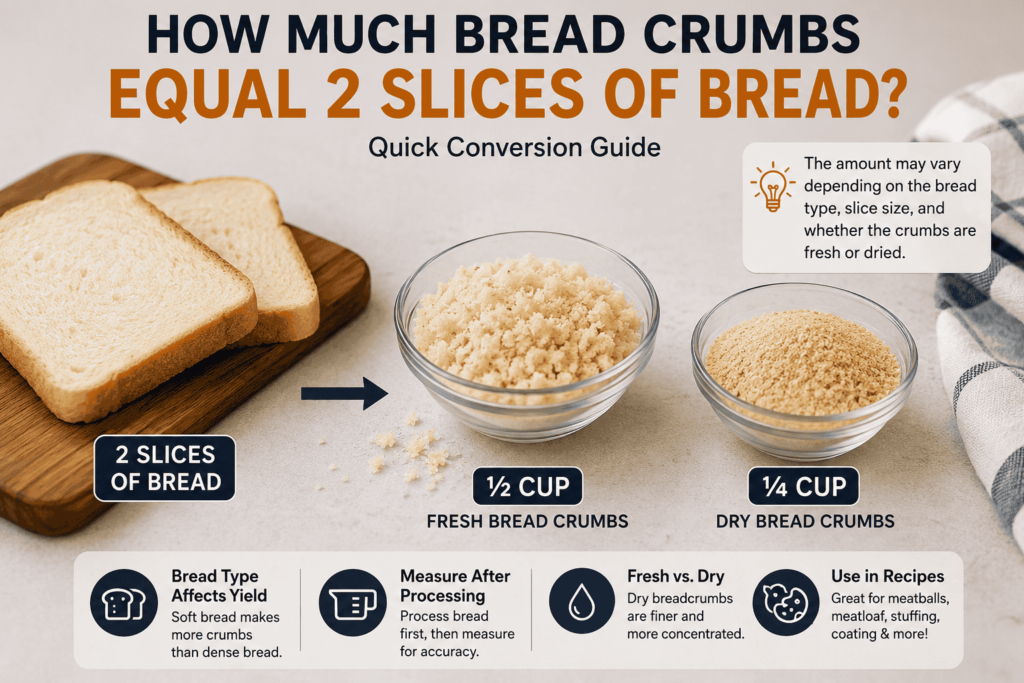
Two regular slices of bread make approximately ½ cup of fresh breadcrumbs or ¼ cup of dried breadcrumbs. The exact amount depends on the bread’s size, thickness, density, and whether you’re using white, whole wheat, or artisan bread. Drying the bread removes moisture, reducing the overall volume of the breadcrumbs while making them finer and lighter.
Bread Slices ↔ Breadcrumbs Calculator
Type in either box — the other updates automatically. Yield varies by bread thickness and density; treat this as a practical estimate.
Bread to Breadcrumb Conversion Chart
| Bread Slices | Fresh Breadcrumbs | Dry Breadcrumbs |
|---|---|---|
| 1 slice | About ¼ cup | About 2 tablespoons (⅛ cup) |
| 2 slices | About ½ cup | About ¼ cup |
| 3 slices | About ¾ cup | About ⅜ cup (6 tbsp) |
| 4 slices | About 1 cup | About ½ cup |
| 6 slices | About 1½ cups | About ¾ cup |
| 8 slices | About 2 cups | About 1 cup |
These are average conversions using regular sandwich bread. Fresh breadcrumbs contain the bread’s natural moisture, so they produce a larger volume than dried breadcrumbs — after drying or toasting, the bread loses moisture, resulting in a smaller but more concentrated amount. Thick artisan bread, homemade loaves, and dense whole grain bread may produce slightly different yields than standard sandwich bread. Keep reading for a breakdown by breadcrumb type and bread variety, plus how to make your own.
How Much Bread Crumbs Equal 2 Slices of Bread?
If a recipe calls for breadcrumbs but you only have sliced bread, it’s helpful to know how much each slice yields. Two regular slices of bread generally produce about ½ cup of fresh breadcrumbs or ¼ cup of dried breadcrumbs. However, the exact amount can vary depending on the bread’s thickness, density, moisture content, and whether you’re making fine or coarse crumbs.
The type of breadcrumbs you need also matters. Fresh, dried, and panko breadcrumbs have different textures and volumes, so they aren’t always interchangeable in equal amounts.
Fresh Breadcrumbs
Two regular slices of bread make approximately ½ cup of fresh breadcrumbs.
Fresh breadcrumbs are made by processing soft bread without drying it first. Because they still contain moisture, they’re light, fluffy, and slightly larger than dried crumbs.
Fresh breadcrumbs are commonly used for:
- Meatballs and meatloaf
- Stuffing and dressing
- Burger patties
- Casserole toppings
- Crab cakes and fish cakes
If your recipe calls for fresh breadcrumbs, two slices of standard sandwich bread are usually enough to make about ½ cup.
Dry Breadcrumbs
Two regular slices of bread typically yield about ¼ cup of dried breadcrumbs.
To make dry breadcrumbs, bread is first toasted or baked until completely dry and then ground into fine crumbs. As the moisture evaporates, the bread shrinks, producing a smaller volume than fresh breadcrumbs.
Dry breadcrumbs work well for:
- Breading chicken, fish, and vegetables
- Crispy coatings for fried foods
- Binding ingredients in recipes
- Sprinkling over baked pasta dishes
Because they’re more concentrated, ¼ cup of dried breadcrumbs provides roughly the same amount of bread as ½ cup of fresh breadcrumbs.
Panko Breadcrumbs
Two slices of bread generally produce about ½ to ¾ cup of homemade panko breadcrumbs, depending on the bread type and how coarsely they’re processed.
Panko breadcrumbs differ from traditional breadcrumbs because they’re made from bread with a coarse, flaky texture rather than fine crumbs. They create a lighter, crispier coating and absorb less oil during cooking.
Panko is ideal for recipes such as:
- Fried chicken
- Breaded shrimp
- Crispy fish fillets
- Croquettes
- Baked casseroles
Keep in mind that homemade panko made from sandwich bread may not have the exact texture of store-bought Japanese panko, but it can still provide a similar crispy finish in many recipes.
Does Bread Type Affect Breadcrumb Yield?
Yes. The type of bread you use can significantly affect how many breadcrumbs you get from each slice. While two regular slices of bread usually produce about ½ cup of fresh breadcrumbs or ¼ cup of dried breadcrumbs, the actual yield varies based on the bread’s thickness, density, moisture content, and crumb structure.
Some breads create light, fluffy crumbs, while others produce denser or coarser breadcrumbs. Knowing these differences can help you achieve the right texture and quantity for your recipe.
White Bread
White sandwich bread is the most common choice for homemade breadcrumbs because it has a soft texture and a fine crumb.
Two regular slices of white bread typically yield:
- About ½ cup fresh breadcrumbs
- About ¼ cup dried breadcrumbs
White bread produces light, even crumbs that work well for:
- Meatballs
- Meatloaf
- Chicken coating
- Stuffing
- Casseroles
Its neutral flavor also makes it suitable for both savory and sweet recipes.
Whole Wheat Bread
Whole wheat bread generally produces a similar volume of breadcrumbs as white bread, but the crumbs are slightly denser due to the higher fiber content.
Two slices usually make:
- About ½ cup fresh breadcrumbs
- About ¼ cup dried breadcrumbs
Whole wheat breadcrumbs have a nuttier flavor and are a great option for healthier recipes, including:
- Veggie burgers
- Turkey meatballs
- Whole grain casseroles
- Baked chicken
Sandwich Bread
Standard sandwich bread—whether white, wheat, or multigrain—is the benchmark for most breadcrumb conversion charts.
For two regular sandwich bread slices, you can expect approximately:
- ½ cup fresh breadcrumbs
- ¼ cup dried breadcrumbs
Since sandwich bread has a consistent size and texture, it provides the most reliable breadcrumb measurements for recipes.
See our guide on How Many Ounces of Grains Is 1 Slice of Bread? for grain serving details.
Artisan Bread
Artisan breads, such as country loaves or rustic bakery bread, are usually thicker, denser, and have larger air pockets than sandwich bread.
Because of their size:
- One slice may produce more breadcrumbs than a standard slice.
- The exact yield depends on the slice’s thickness and density.
Artisan breadcrumbs tend to be coarser and are excellent for:
- Crispy toppings
- Homemade stuffing
- Breaded cutlets
- Baked pasta dishes
If using artisan bread, it’s best to measure the finished breadcrumbs instead of relying solely on the number of slices.
Sourdough Bread
Sourdough bread creates flavorful breadcrumbs with a slightly tangy taste. Depending on the loaf, sourdough slices can be thicker than regular sandwich bread, so the yield may be slightly higher.
Homemade sourdough breadcrumbs are ideal for:
- Breading fish and chicken
- Crispy casserole toppings
- Homemade croutons
- Stuffing recipes
Because sourdough has an airy crumb structure, the breadcrumbs may be lighter and less uniform than those made from standard sandwich bread. As with artisan bread, measuring the breadcrumbs after processing is the most accurate approach.
Key takeaway: While 2 regular slices of sandwich bread equal about ½ cup fresh breadcrumbs or ¼ cup dried breadcrumbs, thicker breads like artisan or sourdough may produce more, while thinner slices may produce slightly less. For the best results, always measure the finished breadcrumbs rather than estimating by the number of slices alone.
Fresh vs. Dry Breadcrumbs
Fresh and dry breadcrumbs are both made from bread, but they differ in texture, moisture content, shelf life, and the types of recipes they’re best suited for. Understanding the difference helps you choose the right breadcrumb for your dish and make accurate substitutions.
What Are Fresh Breadcrumbs?
Fresh breadcrumbs are made by processing soft, fresh bread without drying or toasting it first. Because they retain their natural moisture, they’re soft, fluffy, and slightly coarse.
Characteristics of fresh breadcrumbs:
- Soft and moist texture
- Larger, fluffier crumbs
- Mild bread flavor
- Short shelf life (best used within a few days or frozen)
Fresh breadcrumbs are commonly used in recipes where moisture and tenderness are important, such as:
- Meatballs
- Meatloaf
- Stuffing
- Crab cakes
- Veggie burgers
- Casserole toppings
As a general guide, 2 slices of regular bread produce about ½ cup of fresh breadcrumbs.
What Are Dry Breadcrumbs?
Dry breadcrumbs are made by toasting or drying bread completely before grinding it into crumbs. Removing the moisture creates smaller, finer, and crispier crumbs with a longer shelf life.
Characteristics of dry breadcrumbs:
- Dry, crisp texture
- Fine or medium-sized crumbs
- Longer storage life
- Better for crispy coatings
Dry breadcrumbs are ideal for:
- Breading chicken, fish, and vegetables
- Fried foods
- Crispy baked toppings
- Thickening and binding mixtures
Because drying removes moisture, 2 slices of bread typically make about ¼ cup of dry breadcrumbs.
Which Is Better for Recipes?
Neither type is universally better—it depends on what you’re cooking.
Choose fresh breadcrumbs when you want:
- Softer texture
- More moisture
- Tender meatballs or meatloaf
- Fluffy stuffing
Choose dry breadcrumbs when you want:
- Crispy coatings
- Crunchy toppings
- Better browning
- Longer storage
If a recipe specifically calls for fresh or dry breadcrumbs, it’s best to use the type listed. Substituting one for the other without adjusting the quantity can affect the texture and consistency of the finished dish.
How to Make Breadcrumbs From 2 Slices of Bread
Making breadcrumbs at home is quick, inexpensive, and requires only two slices of bread and a few minutes. Depending on the equipment you have, you can make fresh or dry breadcrumbs using a food processor, blender, or even by hand.
Using a Food Processor
A food processor is the fastest and easiest way to make evenly sized breadcrumbs.
Steps:
- Cut 2 slices of bread into small pieces.
- Place the pieces into the food processor.
- Pulse for several seconds until you reach the desired texture.
- For fresh breadcrumbs, use the bread as is.
- For dry breadcrumbs, toast or bake the bread first, let it cool completely, then process it.
This method produces consistent breadcrumbs that work well for almost any recipe.
Using a Blender
A blender is another convenient option if you don’t have a food processor.
Steps:
- Tear the bread into small chunks.
- Add a few pieces at a time to the blender.
- Pulse in short bursts until the crumbs are evenly ground.
- Shake the blender occasionally to distribute larger pieces.
Avoid blending continuously, as this can create uneven crumbs or compress the bread instead of breaking it apart.
Making Breadcrumbs by Hand
If you don’t have kitchen appliances, you can still make breadcrumbs manually.
For fresh breadcrumbs:
- Remove the crusts if desired.
- Tear the bread into very small pieces using your hands.
- Continue crumbling until you reach the desired consistency.
For dry breadcrumbs:
- Toast or bake the bread until it’s completely dry.
- Let it cool.
- Place the bread in a resealable plastic bag.
- Crush it with a rolling pin, heavy pan, or similar kitchen tool until fine crumbs form.
Although this method takes a little more time, it works well for small batches and doesn’t require any special equipment.
Tip: If you’re making extra breadcrumbs, store fresh breadcrumbs in the refrigerator for up to 3 days or freeze them for up to 3 months. Dry breadcrumbs can be kept in an airtight container in a cool, dry place for several weeks, or frozen for even longer freshness.
Common Recipes That Use Breadcrumbs
Breadcrumbs are a versatile ingredient used in many savory recipes. They can act as a binder, coating, topping, or filler, helping improve texture, absorb moisture, and create a crispy finish. Whether you use fresh or dry breadcrumbs depends on the recipe and the desired result.
Meatballs
Breadcrumbs are a key ingredient in homemade meatballs because they help bind the meat mixture while keeping it tender and juicy.
Fresh breadcrumbs are often preferred because they retain moisture, but dry breadcrumbs also work well when combined with milk or eggs.
Meatloaf
Most meatloaf recipes include breadcrumbs to hold the ingredients together and prevent the meat from becoming dense or dry.
Either fresh or dry breadcrumbs can be used, although fresh breadcrumbs generally produce a softer texture.
Chicken Coating
Dry breadcrumbs are commonly used to coat chicken before baking, frying, or air frying. They create a crispy, golden crust that helps seal in moisture.
For cooking and portion tips, see our guide on Chicken Breast Weight Raw vs Cooked Difference.
For extra crunch, many cooks use panko breadcrumbs, which have a lighter and flakier texture than traditional breadcrumbs.
Stuffing
Fresh breadcrumbs are a popular choice for stuffing because they absorb broth, butter, and seasonings while remaining soft.
Cubed bread is also commonly used, but homemade fresh breadcrumbs can provide a more even texture throughout the stuffing.
Casseroles
Breadcrumbs make an excellent topping for casseroles, adding a crunchy layer that contrasts with the creamy filling underneath.
Both dry and panko breadcrumbs work especially well for:
- Macaroni and cheese
- Potato casseroles
- Vegetable bakes
- Tuna casserole
- Baked pasta dishes
Breadcrumbs pair well with cheesy casseroles, especially macaroni and cheese. If you’re estimating cheese quantities, check out our guide on How Many Slices of Cheese in a Pound?
How to Measure Breadcrumbs Accurately
Accurate measurement helps ensure your recipe has the right texture and consistency. Because fresh and dry breadcrumbs have different moisture levels, measuring them correctly is important.
Using Measuring Cups
The easiest and most accurate method is to use standard dry measuring cups.
To measure breadcrumbs:
- Spoon the breadcrumbs into the measuring cup.
- Fill the cup until it reaches the top.
- Level it off with the straight edge of a knife or spatula.
Avoid estimating by eye, especially when doubling or halving recipes.
Packing vs. Loosely Filling the Cup
Breadcrumbs should not be firmly packed unless the recipe specifically instructs you to do so.
- Fresh breadcrumbs should be lightly spooned into the measuring cup because they naturally contain air and moisture.
- Dry breadcrumbs should also be measured loosely and leveled off rather than compressed.
Packing the breadcrumbs can result in using significantly more than the recipe intended, which may make meatballs, meatloaf, stuffing, or coatings denser and drier.
Can You Substitute Fresh and Dry Breadcrumbs?
Yes. In many recipes, fresh and dry breadcrumbs can be substituted, but because they contain different amounts of moisture, you’ll need to adjust the quantity to maintain the correct texture.
Fresh to Dry Conversion
Fresh breadcrumbs contain more moisture and take up more space than dry breadcrumbs.
A general conversion is:
- ½ cup fresh breadcrumbs = ¼ cup dry breadcrumbs
- 2 slices of bread = about ½ cup fresh or ¼ cup dry breadcrumbs
If substituting fresh breadcrumbs with dry breadcrumbs, use about half the volume.
Dry to Fresh Conversion
When replacing dry breadcrumbs with fresh ones, you’ll need to increase the amount because fresh breadcrumbs are lighter and contain moisture.
A general conversion is:
- ¼ cup dry breadcrumbs = ½ cup fresh breadcrumbs
- 1 cup dry breadcrumbs = 2 cups fresh breadcrumbs
Keep in mind that fresh breadcrumbs may add a little extra moisture to the recipe. For coatings and crispy toppings, dry or panko breadcrumbs usually provide the best texture, while fresh breadcrumbs are often better for recipes like meatballs, meatloaf, and stuffing where tenderness is important.
Frequently Asked Questions
Two regular slices of bread make approximately ½ cup of fresh breadcrumbs or ¼ cup of dry breadcrumbs. The exact amount depends on the bread’s size, thickness, and moisture content. Thick artisan bread may produce slightly more, while thin sandwich bread may produce a little less.
Yes. Two standard slices of sandwich bread typically yield about ½ cup of fresh breadcrumbs. If you dry or toast the bread before processing, the same two slices usually produce about ¼ cup of dry breadcrumbs because moisture is removed during drying.
Yes. Fresh bread can easily be turned into homemade breadcrumbs by pulsing it in a food processor, blender, or grating it by hand. If a recipe calls for fresh breadcrumbs, you can use the bread immediately after processing. For dry breadcrumbs, toast or bake the bread until it’s completely dry before making the crumbs.
To make 1 cup of fresh breadcrumbs, you’ll typically need 4 regular slices of bread.
If you need 1 cup of dry breadcrumbs, you’ll usually need about 8 regular slices, since drying the bread reduces its volume by removing moisture.
Yes. Frozen bread works very well for making breadcrumbs. You can thaw it slightly before processing or, if your food processor is powerful enough, process it while it’s still partially frozen. Frozen bread often crumbles easily, making it a convenient option for homemade breadcrumbs.
Yes, but only slightly. Including the crust usually produces a slightly larger volume of breadcrumbs and gives them a darker color and firmer texture. Removing the crust creates finer, lighter-colored breadcrumbs that are often preferred for delicate recipes. The overall difference in quantity is small.
It depends on the type of breadcrumbs you need.
Do not toast the bread if your recipe calls for fresh breadcrumbs.
Toast or bake the bread until completely dry if you need dry breadcrumbs or want a crisp coating for fried or baked foods.
Toasting removes moisture, making the breadcrumbs finer, crunchier, and easier to store for longer periods.
Final Answer
For most recipes, 2 regular slices of bread produce about ½ cup of fresh breadcrumbs or ¼ cup of dry breadcrumbs. While this conversion works well for standard sandwich bread, the exact yield can vary depending on the slice thickness, bread type, density, and whether the bread is fresh or fully dried before processing. Artisan and homemade breads may produce slightly different amounts due to their size and texture. To ensure the best results in your recipe, measure the breadcrumbs after processing rather than estimating by the number of bread slices, especially when baking or preparing dishes that rely on precise ingredient ratios.